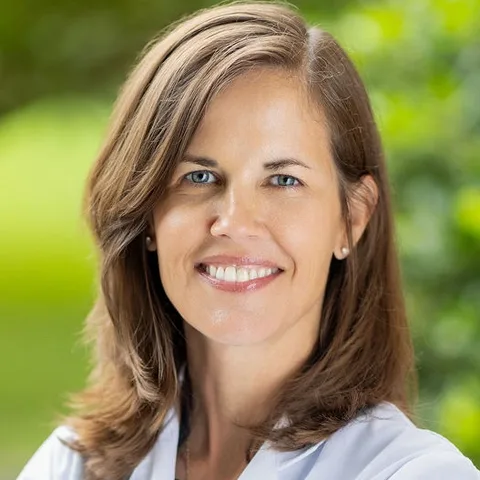
Dr. Abraham runs a small solo gynecology practice in the Foxhall Square building in Northwest DC. Menopause care is a core part of what she does, from the first perimenopause changes through hormone therapy after menopause. She also treats bone loss, recurrent UTIs and vaginal and urinary changes, and makes room to talk about low libido and postmenopausal bleeding. Visits are long and unhurried, and the office offers same day or same week appointments. Before training as a doctor she worked in healthcare consulting for a large health insurer, which helps explain why she chose to work outside insurance. She doesn't do obstetrics, and new patients are asked to send the last year or two of records before the first visit.
Capital Women's Care DC is a group OB-GYN practice near Foggy Bottom, and Dr. Bajaj is the managing partner of the Washington office. She spent nearly two decades doing both obstetrics and gynecology, then stopped obstetrics in 2022 to practice gynecology only, with perimenopause and menopause as her focus. She says she wants to close the knowledge gap around hormone replacement therapy, and she writes publicly about women's health on a site of her own. You book online or by phone, and appointments can be in person or by video. Alongside menopause care the office does in-office procedures and minimally invasive gyn surgery, so a woman who needs both can stay in one place. Worth knowing is that the practice says an annual well-woman visit with the doctor of your choice usually takes one to three months to get.
Ackerly McBride Group is a small concierge primary care practice in northwest Washington, with five physicians and two physician assistants. Each provider offers an annual membership that covers the yearly physical, the lab work that goes with it and a wellness visit, and each one keeps a limited panel. Dr. Hart is a family physician who sees adolescents and adults, and she also teaches at Georgetown, where she is a professor of family medicine and runs the primary care leadership track. The practice says she became a Menopause Society Certified Practitioner after she joined, and it lists her expertise as evidence-based primary care, family medicine and women's health. It does not name menopause or hormone treatment for her anywhere on the site, and the only provider whose expertise line reads menopause and perimenopause is her partner Dr. Lucy McBride. New patients start with the practice's inquiry form, and her own panel has been on hold while her schedule is set.
IntimMedicine Specialists is a small Washington DC practice that Dr. Simon founded and still runs as medical director, with two physician assistants who have worked with him since the 1990s. He treats women across the whole reproductive span, and the midlife side of the practice covers menopause and perimenopause, low testosterone, bone loss, sexual pain and sexual function after cancer. His approach to hormones is to balance estrogen, progesterone and testosterone, and the practice says most women can use hormone therapy with few risks. For testosterone he will use gels, injections or pellets, and he says he does not treat on lab values alone. Visits happen in the M Street office or by video, and virtual appointments are offered on Saturday mornings as well as weekdays. New patients submit a form or call and the office rings back to finish booking, and because the practice runs its own clinical trials some patients are offered a place in a study.
Jennifer Lanoff is the only clinician at washGYN, a small Washington practice she runs for menopause, perimenopause and complex gynecology. She prescribes estrogen, progesterone and testosterone using FDA approved products, and offers non-hormonal options such as fezolinetant, SSRIs, gabapentin and oxybutynin for hot flashes. Visits run long on purpose, and every new patient fills in a medical history questionnaire first so the office can pick the right length of visit. She spent more than two decades as a lawyer, including a stretch as a Deputy Trial Chief at the Public Defender Service for the District of Columbia, before training in nursing at Johns Hopkins and Georgetown. Many of her patients arrive with overlapping conditions such as endometriosis, POTS, MCAS and Ehlers-Danlos, and the partner surgical practice sends its non-surgical cases to her. She is the only clinician here who can be booked online, and she also sees established patients by video in six states.
Jo'Ann Jackson is an obstetrician gynecologist at Reiter, Hill & Johnson of Advantia, a women's health group with offices in Washington and Northern Virginia. She joined the practice in 2006 and is now one of its physician managers, and she sees patients at the Washington and Falls Church offices. Her own provider page names menopause care and hormone replacement therapy, which most of her colleagues' pages do not. Along with her Menopause Society certification she holds the Heather Hirsch Academy hormone therapy certification that Advantia put several of its clinicians through, and she is a practising physician member of the International Society for the Study of Women's Sexual Health. The practice menopause page covers hormone therapy, vaginal hormonal medication and non hormonal options such as low dose antidepressants. New patients self schedule online and fill in a health history in the portal before the first visit, and the Washington office runs Saturday morning clinics twice a month.
Foxhall Women's Health is a small northwest Washington practice with three gynecologists and two nurse practitioners, and Shannon Green has been there since 2011. She stopped obstetrics and her practice is now entirely gynecologic, with menopause management, abnormal bleeding, contraception and minimally invasive procedures named as her areas of expertise. The practice's menopause care covers hormone replacement therapy including bioidentical hormone therapy, osteoporosis screening and treatment, post menopausal bleeding and sexual health. One of her two physician partners is also a Menopause Society certified provider, so this is the practice's work and not one clinician's side interest. There is an onsite lab and gynecologic ultrasound, minor procedures happen in the practice's own procedure room, and surgery goes to Johns Hopkins Medicine Sibley Memorial Hospital. The practice has added a family nurse practitioner so patients can get primary care in the same office, and video visits are offered for reasons that include hormone replacement therapy and osteoporosis.
Clare Heintzelman is a nurse practitioner at Bloom OB/GYN, a busy gynecology and obstetrics group in upper Northwest DC, and she handles menopause and midlife care there. Before becoming an NP she spent about six years as a labor and delivery nurse at Sibley Memorial Hospital. The practice treats menopause symptoms with hormone therapy or with non-hormonal medicines for women who can't or would rather not take hormones, and it also watches bone density. Visits are billed to insurance. New patients start with an office visit, and after that routine follow-ups, lab reviews and prescription changes can happen by video. Patient reviews single her out for being patient and unhurried with questions.