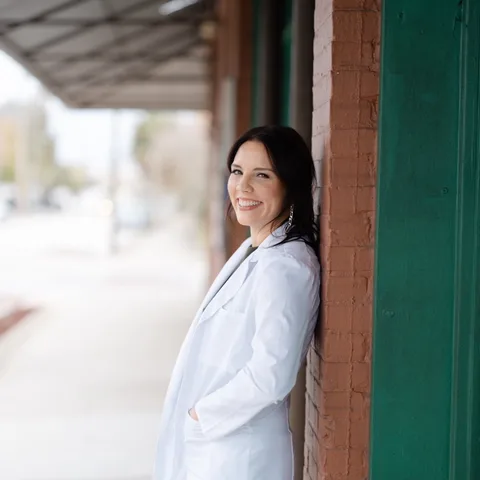
Dr. Krapf runs her own gynecology practice in South Tampa focused on vulvar and pelvic pain, vulvar skin conditions such as lichen sclerosus, recurrent vaginitis and menopause. She spent several years as an associate director at a Washington DC center devoted to vulvar pain before opening the Tampa office in 2023. Her site puts menopause alongside vulvar pain and skin conditions, so she is a natural fit for women whose menopause symptoms show up as painful sex or vulvar discomfort. She co-wrote the book When Sex Hurts and helps edit a medical textbook on female sexual pain. New patients start by emailing the office to request a consult, and her former DC patients can continue with her in Tampa.
Dr. Reyes founded Magnolia Gynecology in Tampa and sees menopause and hormone patients by video. The first visit is an hour, labs are ordered during it, and follow-ups are shorter and usually come about three months later. Prescribing is only for people living in Florida. Women in other states can book an education-only consult where nothing is prescribed. The practice writes openly that pellets push hormone levels too high, so it mostly uses testosterone gels and creams that can be stopped. Blood levels are checked every four to six weeks when testosterone starts.
This is a one-physician OB-GYN practice. The only other clinician on the booking system is a physician assistant who does aesthetic injectables, so the menopause care is Dr. Bender-Ralph's alone. It runs as a cash-pay concierge practice with optional memberships that add text and phone access to her and same-day visits. New patients book a one-hour peri/menopause consultation, and follow-ups can be done in the office or by video. Her hormone program uses bioidentical hormones made by a compounding pharmacy and starts with a blood panel, with pellets the method the site describes in most detail. She also does cosmetic gynecology and a medical weight loss program, so some patients fold those into the same visits.
Magnolia Gynecology is a small Tampa gynecology office founded by Dr. Alexandria Reyes, and Dr. Moorhead sees patients there in person. Her own bookable visits are all in-clinic, covering annual wellness and gynecologic problem visits, with a longer version when a pelvic ultrasound is needed. She is board-certified in Obesity Medicine on top of obstetrics and gynecology, so weight management sits inside her gynecologic care rather than alongside it. Her visits take in heavy bleeding, pelvic pain and hormone concerns through the menopause transition, and she pairs medical treatment with guidance on nutrition, sleep and activity. The office asks for the full fee at the time you book online. The virtual hormone consults advertised on the site are run by her partner through a separate company, so a video visit here is not with her.
Marisa Baker is a general obstetrician gynecologist on the USF Health faculty, seeing patients at the department office on Tampa General Circle and at a second office on Palm River Road. Her USF provider page names menopause, perimenopause and hormone replacement therapy among the conditions she handles, along with premature ovarian failure and primary ovarian insufficiency. She is one of only two physicians USF lists under gynecologic ultrasound, and her published research looked at how the reading physician's specialty changes what a pelvic ultrasound detects. This is an academic practice, so visits are billed to insurance and appointments are arranged by phone rather than booked online. She finished medical school at USF in 2000 and has stayed there since, picking up two national awards for teaching residents. USF's own menopause page points to three other doctors in the department, so she reads as a general gynecologist who treats menopause rather than the clinic's designated menopause specialist.