346 practitioners have an office in New York, and 126 more can see patients here by telehealth. 326 of them are certified by the Menopause Society, and the most are in New York, Rochester and Brooklyn.
Dr. Fleischman runs a small hormone practice in Stamford that treats both women and men. Care starts with a free 15 minute phone call, then a detailed health questionnaire filled in through the patient portal and an hour long first visit. A phlebotomist comes to your home or office to draw blood and collect urine or saliva samples, and those results shape a written plan given at a second visit. She leans hard on bioidentical hormones and offers pellets, injections, creams, capsules and vaginal treatment, with prescriptions filled at either a compounding pharmacy or a regular one. Her training is in anti-aging and functional medicine rather than gynecology, so plans come with food, sleep and stress advice alongside the hormones. Follow up is about six weeks in and then two to four times a year.
Dr. Weisenfeld is a board-certified internist with rheumatology training who runs a small private-pay practice only for perimenopause and menopause. She sees patients in person in Westport and by video across Connecticut and New York. The first visit is a 50-minute consultation, and she pays particular attention to bone health. She also sees women with a history of breast cancer, and a free discovery call is offered before booking.
Dr. Zimmerman is a board-certified internist with a small private practice in Bay Head, where she sees adults for primary care as well as menopause. She uses bioidentical hormones when hormone therapy is a good fit and prescribes non-hormonal options when it is not. Before recommending anything she goes through your medical and family history, with close attention to osteoporosis, breast cancer and heart disease risk. She worked as a psychiatric social worker before medicine and still manages psychiatric medication, so she can treat mood and anxiety alongside hormones. She books longer visits than most offices on purpose. New patients request a visit through an online form, and staff confirm it by phone.
Faubion is an internist at Mayo Clinic in Jacksonville and sees patients through its Women's Health Specialty Clinic. She founded and directs the Mayo Clinic Center for Women's Health, and every condition listed on her own clinical page is a menopause or female sexual health one, so midlife care is the whole of her practice. The clinic runs two routes for a new patient, a menopause consultation that covers natural, surgical and cancer treatment induced menopause as well as primary ovarian insufficiency, and a sexual health consultation for low libido and painful sex. Her page says she helps women work through hormone therapy and understand their options. Appointments go through Mayo's central request process, which in most cases needs no referral, and established patients message her team through the Mayo patient portal. She also practices at Mayo's Rochester campus, and away from work she grows orchids and cooks.
Dr. Wang is an internist who spent about 20 years in primary care and is also board certified in obesity medicine. She now sees women in perimenopause and menopause by video only, as an affiliate clinician of Dr. Heather Hirsch's Collaborative membership. Care runs through that membership, which has a one-year minimum and covers visits and messages with no charge per visit, plus group Q&As and coaching sessions. Her approach puts a lot of weight on nutrition, metabolic health and mindset alongside medical treatment. She asks patients to keep their own primary care doctor and gynecologist for hands-on care, since she does not see anyone in person.
Jackie Stone, MD sees women entirely by telehealth, in a practice she runs alone. She is board certified in obstetrics and gynecology and in obesity medicine, and treats perimenopause, menopause and primary ovarian insufficiency alongside PCOS, genitourinary symptoms, sexual wellness, and skin and hair changes. First visits run a full hour and cover past records, labs and a treatment plan. Ongoing care is by monthly membership or visit by visit, with direct messaging for members.
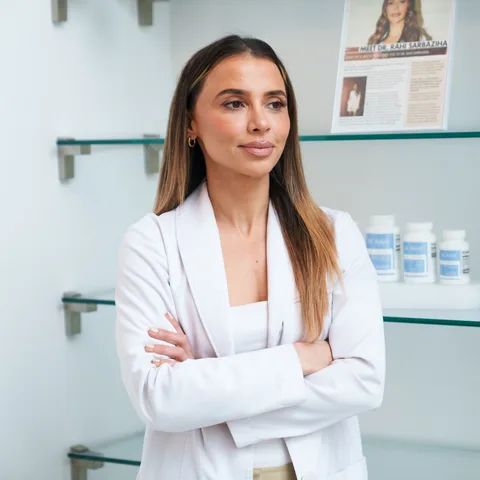
Dr. Rahi runs a solo med spa on Rodeo Drive called The Aesthetic Room, where cosmetic treatments sit alongside hormone and weight care. She trained in internal medicine and calls her practice integrative aesthetics, and she expects hormone patients to combine that care with her peptide and IV treatments. For hormones she uses bioidentical estrogen, progesterone and testosterone, and she also adjusts thyroid and cortisol, starting with lab testing and following up with monitoring. Her own FAQ says delivery can be a cream, an injection or a pellet depending on your needs. The weight program runs on semaglutide and tirzepatide, and she offers a non-surgical vaginal treatment using radiofrequency, laser or platelet-rich plasma for post-menopausal dryness and mild stress incontinence. The only appointment you can book with her by name online is a Zoom consultation, and the rest of the care starts from there.
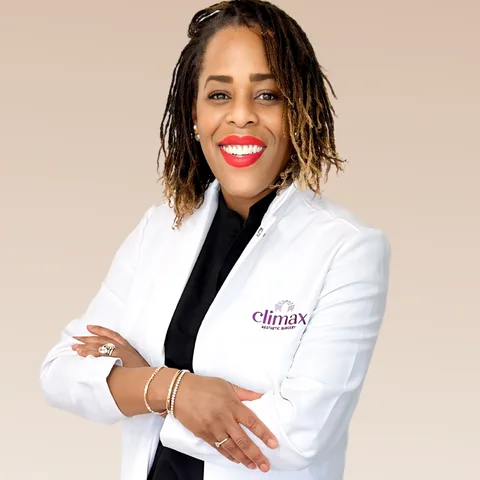
Dr. Ojo-Carons founded Climax Aesthetic Surgery, a sexual health and cosmetic gynecology practice with offices in Virginia Beach, Columbia in Maryland, and New York. She is a gynecologist who also trained in cosmetic gynecologic surgery, so much of the practice centers on sexual function, urinary leakage and vaginal dryness alongside hormone therapy. Hormone care starts with a symptom review and lab testing, and she prescribes bioidentical hormones, estrogen, progesterone, testosterone and pellets. Pellet therapy is sold as a yearlong membership that covers the insertions and lab work. New patients usually begin with a discovery call, and virtual consultations can be booked online. The practice treats men as well as women and also offers injectables and other aesthetic work.
A solo practice run by a physician board-certified in OB/GYN, maternal-fetal medicine, obesity medicine and lifestyle medicine, caring for women from preconception through menopause with weight, metabolic and midlife hormone management under one clinician rather than split between specialists. Care is hybrid. Most visits are virtual across New Jersey, New York and Pennsylvania, and there is a Fanwood office for in-person appointments and body composition scans. After a flat intake visit, patients either pay per visit or join a single membership that bundles all visits, portal messaging with a one to two business-day reply, periodic labs, and screening reminders. Dr. Maggio is unusually open about her own hundred-pound weight loss and frames obesity as a chronic condition rather than a willpower problem.
Dr. Dweck is a gynecologist who sees menopause patients at Well by Messer, a multi-specialty metabolic and wellness practice on the Upper East Side of Manhattan. She moved there after 29 years in practice in Westchester County. At the practice she focuses on gynecology, menopause and sexual health, including hormone therapy, painful sex, low libido and vaginal changes after menopause. She also has training in medical sex therapy, which is unusual for a menopause doctor. New patients request an appointment through an online form, and the office calls back within a day to confirm it. Outside the clinic she is chief medical officer of Bonafide, a company that makes non-drug menopause products.
Dr. Eden is a gynecologist with a solo private practice in Midtown East, where she sees women from adolescence through menopause and beyond. For menopause care she starts with a physical exam and a review of your history, then builds a plan that can include hormone therapy and lifestyle changes. She also does the MonaLisa Touch vaginal laser in her office and offers it as an alternative or add-on to hormones for dryness, painful sex and mild leaking. She treats lichen sclerosus and other vulvar skin conditions, which many menopause clinicians don't. She says she spends a lot of time with each patient, and she is a keen believer in yoga and other complementary therapies.
Dr. Hertel runs a virtual-only practice focused on perimenopause, menopause and midlife care, with every visit held inside a secure patient portal. She is a family physician going through the menopause transition herself, and says that experience is what drew her to this work. She prescribes FDA-approved hormone therapy sent to your local pharmacy and does not use estrogen or testosterone pellets. The practice also offers medication-supported weight care and help with low libido and painful sex. It does not do Pap smears, pelvic exams or primary care, so you keep your own doctor and gynecologist for screenings. New patients start with a free 15-minute discovery call, and people outside her licensed states can book an educational visit that ends with a written plan but no prescriptions.
FemGevity is a virtual women's health service that works alongside a patient's own doctor, and Dr. Abrahams is its menopause medical advisor. He sees patients himself by video, starting with a 45 minute consult about symptoms and hormone levels. Care starts with testing, usually a hormone panel of more than 100 biomarkers, with gut, micronutrient or genomic panels added when they are useful. Treatment can run from standard prescriptions to custom bioidentical compounds, and he describes his approach as conventional medicine combined with complementary care. He is a Harvard-trained gynecologist who also treats endometriosis, PMS and fibroids, and he still works part time for the Department of Veterans Affairs in New York and at Hackensack University Hospital in New Jersey. FemGevity's main menopause program runs through partner doctors' offices, where the blood draw is done, so it helps to have a doctor of your own.
Dr. Adamchak runs a small direct primary care practice in Ellicottville, the town she grew up in. Menopausal hormone therapy is part of the membership along with the rest of her family medicine care. Members get same or next day visits in person or by video, long appointments, and can text, call or email her directly. She trained and practiced as an Army family physician, including time in Germany and a deployment to Afghanistan, and still serves in the Army Reserves. New enrollments are paused for now, with a contact list for openings in 2027. She can't take anyone on Medicare or eligible for it at this time.
Elektra Health is a virtual menopause practice where every visit happens by video, and each patient is paired with a Menopause Society certified clinician plus a coach for nutrition, exercise and emotional support. Elektra clinicians prescribe FDA-approved hormone therapy and non-hormonal options, and the company says plainly that it does not prescribe compounded or non-FDA-approved medications and does not make money from selling supplements or products. It is also not doing medical weight loss at the moment. Visits are billed to insurance where Elektra is in network, and there is a published cash rate for people who are not. DeLasho has belonged to The Menopause Society since 1994, and she says she moved into telehealth because a routine annual gynecology visit never left enough time to talk about menopause. She is named on Elektra's clinician pages, but the sign-up flow pairs each patient with a clinician rather than letting a new patient choose her.
Seashore MD is Dr. Smolinsky's solo gynecology office in Little Silver, set up around the perimenopausal and menopausal years. She looks for the root cause of symptoms first and builds a plan from there, and she uses non-hormonal treatment as well as hormones. Hormone therapy comes in several forms, including pills, patches, creams, gels and EvexiPEL bioidentical pellets inserted in the office. She also treats the physical changes that come with menopause, such as bone and muscle loss, painful sex and repeat bladder infections, and she uses an Emsella chair for pelvic floor weakness and leaks. Visits can be virtual or in person, and the office draws its own blood work through an on-site Quest technician and runs ultrasounds twice a month. Dr. Smolinsky was born and raised in Israel and sees patients in Hebrew as well as English.
Dr. Yehl founded Coastal Women's Medical after 24 years in hospital medicine, having worked first as a nurse and then as a certified nurse midwife before medical school. The practice is built around long visits, with 90 minutes for a new patient and a care plan written once labs come back. Ongoing hormone care runs on a monthly membership with quarterly visits, and patients who become clinically stable can step down to a cheaper program with fewer visits. Weight change in midlife is treated as a hormonal problem, so GLP-1 medication is managed alongside hormone therapy rather than in a separate track. Primary care is reserved for concierge members, and everyone else is seen for hormone, menopause or weight care. The office also runs medical grade red light therapy and a paid audio course for women who want to arrive at an appointment prepared.
Dr. Brode is a board certified urologist who gave up surgery and now runs her own virtual practice for women in perimenopause and menopause, and she sees men for sexual health too. Visits happen by video, and she takes patients in Michigan, New York and Texas. New patients can start with a short introductory call that is only a conversation about whether she is a fit, with no diagnosis or prescribing. Her hormone care stays with FDA approved therapy, and a visit covers sleep, mood, stress and daily life as much as medication. Her urology background shows in what she treats, including bladder leaks, urgency, waking at night to urinate and repeat UTIs alongside vaginal dryness and painful sex. She says going through perimenopause herself showed her how little she and other clinicians had been told about the options, and she went on to take extra training in menopause care.
A physician-led longevity and performance practice based in Seattle, where the practitioner is medical director. Care begins with an in-person day in the Seattle area for baseline diagnostics, covering over a hundred biomarkers, body composition, cardiorespiratory fitness, continuous glucose monitoring, genomics and multi-cancer screening. It then moves to quarterly labs and structured medical reviews, with follow-ups virtual or in person. A women's track is described for perimenopause, menopause and after, with hormone and metabolic diagnostics and ongoing telehealth support, and physicians provide prescriptions and referrals as clinically appropriate.
Dr. Anyaoku founded Hibiscus Aesthetics and Wellness in Katy and is the only clinician there. Hormone care starts with a wide lab panel rather than a symptom questionnaire, and she orders markers like free T3, DHEA-S and fasting insulin that a standard physical skips. She prescribes bioidentical hormones as patches, creams, injections or pills, and no page on the site mentions pellets. She is also a diplomate of the American Board of Obesity Medicine, so weight and hormone questions get handled in the same visit. Aesthetic treatments happen in person at the Katy clinic, while hormone, weight and longevity care can be done by video in 23 states. You pay per visit and there is no membership or package.
Gliss Wellness is a virtual-only OB/GYN practice Dr. Walsh co-founded with a second board-certified OB/GYN, and menopause care is its main focus. Care starts with a 30-minute video consultation about your symptoms, and if hormone therapy suits you, you leave with prescriptions for the first three months. A follow-up at three months keeps refills going for the rest of the year, and refills in between happen by message through the patient portal. There is no membership, and you fill prescriptions at your own pharmacy. The doctors can't examine you in person but can order labs and other tests. Dr. Walsh's own interests include pelvic pain, endometriosis, fibroids and weight loss, and a free 15-minute call lets you meet the team before booking.
Gennev is an all-virtual menopause clinic owned by Unified Women's Healthcare, and care starts with a 30 minute video visit with a menopause-trained doctor. Dunsmoor-Su is Gennev's chief medical officer and she also carries her own patient list. The areas she names herself include premature ovarian insufficiency, breast cancer risk and survivorship, endometriosis, and weight management with medication. Her background is clinical epidemiology, and she still runs women's health drug trials as a medical director at a Seattle research centre and teaches OB-GYN residents. She says she treats each visit as a chance to explain the current evidence so the decision about treatment is a shared one. Doctors here prescribe FDA-approved hormone therapy when a patient is a candidate and non-hormonal medicines when she is not, and the clinic tells patients to steer clear of compounded weight drugs made outside FDA oversight.
Beyer is a Midi clinical leader and sits on the company advisory board, and she still sees patients by video. She trained in obstetrics and gynaecology, then dropped obstetrics to work on gynaecology and hormonal health only. Weight is her second focus and she holds a diplomate from the American Board of Obesity Medicine. She talks openly about gaining weight before her 50th birthday and losing 35 pounds over five months, and she uses that with patients who are struggling. Care runs through Midi only, so visits are by video and anything needing an exam or imaging goes to an outside clinician. Her page has no booking link of her own, so the Midi sign-up does not let a new patient choose her by name.
Dr Nimaroff runs a minimally invasive gynecologic surgery practice in Great Neck and is also the senior vice president and executive director of obstetrics and gynecology for Northwell Health. Nearly everything the site describes is surgery, and he was among the first physicians in the New York metropolitan area to offer gynecologic robotic procedures. His stated interest is treating fibroids and finding alternatives to hysterectomy, and he performs a laparoscopic abdominal cerclage for cervical insufficiency that few surgeons do. His own bio says he combines hormonal management with minimally invasive and robotic techniques and radiologic interventions. Menopause management appears once, inside the list of general gynecology services the practice says he and his eight partners provide, and no page names a hormone treatment. He sees patients remotely by video, and the practice asks anyone requesting a visit to include a short description of the problem.