Menopause Specialists Who Accept Insurance in Connecticut
86 practitioners have an office in Connecticut, and 85 more can see patients here by telehealth. 117 of them are certified by the Menopause Society, and the most are in Greenwich, New Haven and Stamford.
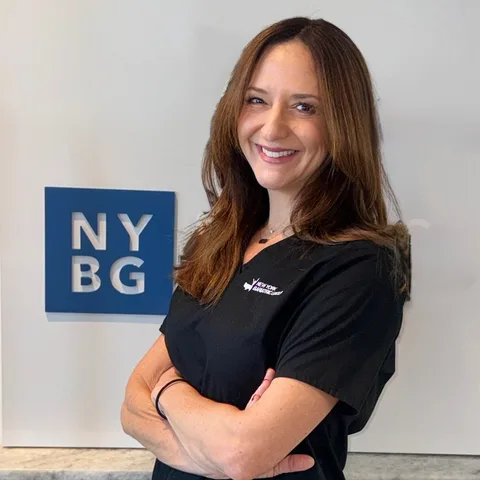
Angela Glasnapp leads Prime Women's Health and Wellness, a menopause program housed inside the New York Bariatric Group. She is a board certified bariatric surgeon and obesity medicine specialist who went on to become a certified menopause practitioner, so one doctor handles both the hormone side and the weight side of midlife. Care runs as a yearly concierge membership with extended visits, priority scheduling, and direct access to her by portal, text or email between appointments. She prescribes systemic and vaginal hormone therapy as well as non hormonal options, and will add a GLP-1 medication to a midlife plan when it fits. Visits happen in person at a few New York and New Jersey offices or by video for patients in New York, New Jersey and Connecticut.
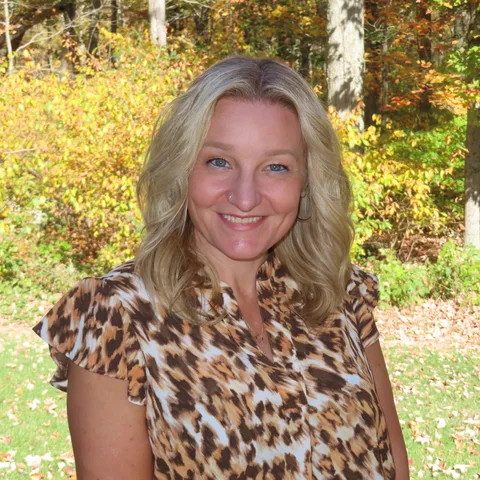
Tammie Blair sees patients through Midi Health, a virtual women's health clinic that works by video only. She focuses on the hormonal changes of perimenopause and menopause, and names weight shifts, poor sleep, mood changes and painful sex as the symptoms those changes drive. A first visit runs about 30 minutes and ends with a written care plan, and follow-ups are shorter check-ins you can book as often as you need. Midi's hormone options are FDA-approved patches, pills, gels, creams and sprays, and a plan can also include vaginal estrogen, non-hormone prescriptions and GLP-1 medication. There is no office to visit, so Midi refers out anything that needs an exam such as a mammogram and asks you to keep seeing your own regular doctors. Her own page on the site has a booking link that starts a new patient with her.
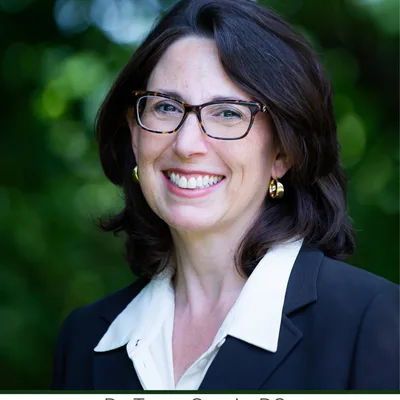
Tanya Smith is a nurse-midwife who moved from pregnancy and birth care to looking after women in perimenopause and menopause. Her practice is entirely by video, and you need to be in Connecticut at the time of each visit. She prescribes FDA-approved bioidentical hormones, testosterone and non-hormonal options, and would rather treat by symptoms than by hormone blood levels. Nutrition and fitness are a big part of her care, with glucose monitor coaching and a workout app. She talks openly about going from overweight to winning a bikini competition at 47 in the middle of perimenopause. New patients book online and fill in intake forms before the first visit.
Dr. Bernard is a family doctor in New Milford with extra fellowship training in reproductive health. Menopause care and hormone therapy are a named part of her practice, alongside sexual health and caring for patients with complicated medical histories. Before medical school she worked in contraceptive research. She sees patients at the Northwell primary care office and at the Women's Wellness Center at New Milford Hospital, both on Elm Street. She grew up in the town and speaks Spanish as well as English. Appointments are made by calling the office.
Elektra Health is a virtual menopause practice where every visit happens by video, and each patient is paired with a Menopause Society certified clinician plus a coach for nutrition, exercise and emotional support. Elektra clinicians prescribe FDA-approved hormone therapy and non-hormonal options, and the company says plainly that it does not prescribe compounded or non-FDA-approved medications and does not make money from selling supplements or products. It is also not doing medical weight loss at the moment. Visits are billed to insurance where Elektra is in network, and there is a published cash rate for people who are not. DeLasho has belonged to The Menopause Society since 1994, and she says she moved into telehealth because a routine annual gynecology visit never left enough time to talk about menopause. She is named on Elektra's clinician pages, but the sign-up flow pairs each patient with a clinician rather than letting a new patient choose her.
Beyer is a Midi clinical leader and sits on the company advisory board, and she still sees patients by video. She trained in obstetrics and gynaecology, then dropped obstetrics to work on gynaecology and hormonal health only. Weight is her second focus and she holds a diplomate from the American Board of Obesity Medicine. She talks openly about gaining weight before her 50th birthday and losing 35 pounds over five months, and she uses that with patients who are struggling. Care runs through Midi only, so visits are by video and anything needing an exam or imaging goes to an outside clinician. Her page has no booking link of her own, so the Midi sign-up does not let a new patient choose her by name.
Dr. La Perla is an OB-GYN with Women's Health Group, part of the large Women's Health Connecticut network, and sees patients in Enfield and Wethersfield. She joined the group in 2022 after residency at St. Francis, where she won an award for excellence in female pelvic medicine and reconstructive surgery. Her bio links to her Menopause Society certification. The group's menopause care uses standard hormone therapy with estrogen and progestin, and it also offers non-hormonal medicines for hot flashes. She works within a full-scope gynecology practice rather than a menopause-only clinic, and her bio says she is taking new patients.
Dr. Lormand is a board certified obstetrician gynecologist at OBGYN and Midwifery of Connecticut, a group of physicians and nurse midwives with offices in Manchester, Colchester and Mansfield Center. She says she cares for women through every stage of life, from puberty and the reproductive years through menopause, and she is a Menopause Society Certified Practitioner. The practice lists menopausal management and hormone replacement therapy among the services it provides, and her own provider profile lists menopausal care and vulvovaginal treatment among the services she offers. For genitourinary symptoms the group describes creams, ointments and low dose topical estrogen, and for hot flashes it describes hormone therapy or certain antidepressants. She also performs office gynecology procedures, endometrial ablation and laparoscopy, while robotic surgery and pelvic floor care are listed for other physicians in the group rather than for her. A mother of three, she says what she likes most about women's health is making patients feel comfortable in a setting that can often feel vulnerable.
Erica Kesselman has been on the medical staff at Day Kimball Hospital in Putnam since 2002 and practises with the Day Kimball Medical Group OB/GYN office on that campus. The group's service list runs from annual exams and maternity care through menopause management, minimally invasive gynecologic surgery and in-office procedures, and the same practice has a second office in Plainfield. Day Kimball lists Dr. Kesselman's own professional interests as pediatric and adolescent gynecology and sexual dysfunction. The hospital's provider directory badges the OB/GYN colleagues at that office as accepting new patients and carries no such badge for Dr. Kesselman, so a new patient may be routed to a colleague. Most of what Dr. Kesselman publishes personally is health education rather than practice information, including two monthly video libraries, one on sex and one on menopause, which the site says are not medical advice. Dr. Kesselman also teaches sex education in local middle and high schools and was a regular voice on a Putnam radio morning show for more than ten years.
Carolyn Bernstein is a headache neurologist at the Osher Center for Integrative Health in Chestnut Hill, which is the Brigham's integrative medicine clinic. The Mass General Brigham profile describes a practice built on migraine and headache disorders, backed by a subspecialty certification in headache medicine. The profile lists membership of the North American Menopause Society and names hormonal headache among stated interests, but no page Mass General Brigham publishes describes menopause care or hormone therapy as care delivered here. The clinic's own service list runs to acupuncture, chiropractic care, massage, mindfulness training, health coaching and neurological conditions with headache called out, and names no menopause or hormone care at all. The Brigham's menopause programme sits in a different suite of the same building and is staffed from gynecology and endocrinology. Bernstein wrote The Migraine Brain and teaches neurology residents and Harvard medical students.