Menopause Society Certified Practitioners in Maryland
100 practitioners have an office in Maryland, and 108 more can see patients here by telehealth. 131 of them are certified by the Menopause Society, and the most are in Bethesda, Rockville and Baltimore.
Takes Aetna, Blue Cross Blue Shield +1 · from $58/mo
Dr. Enzmann is a gynecologist who left hospital practice in 2026 and now offers two kinds of care. At her Glen Burnie office she sees insurance-based gynecology patients on Friday mornings, including menopause assessments, HRT decisions and in-person care for vulvar and vaginal problems like lichen sclerosus and recurrent BV. Her private-pay functional medicine side runs mostly by video and starts with a paid discovery call, followed by lab-heavy programs with a set block of consults. She can prescribe hormones only for women located in Maryland and works with women elsewhere as a health coach who cannot prescribe. She prefers FDA-approved body-identical hormones over custom compounded ones and explains why on her site. She trained in Germany and speaks English, German and Spanish.
Kimberly Bysheim runs a small practice in Prince Frederick for women in perimenopause and menopause across Calvert, Charles and St. Mary's counties. She came to menopause care after years in neurology and primary care. Care starts with a long new-patient consultation that covers your history and goals and includes a detailed talk about hormone therapy, followed by a review of your lab results and a treatment plan you decide on together. She prescribes estrogen, progesterone and testosterone, and also offers nonhormonal medicines for women who can't or don't want to use hormones. Health coaching on food, exercise, sleep and stress is part of her approach. She doesn't take anyone on Medicare, even as a cash patient.
Tina Remillard is a physician assistant at OutPsych, a psychiatry group, and her menopause work centers on the mood, anxiety and focus problems that shifting hormones can bring. She can prescribe hormone therapy, psychiatric medication or both, and folds hormone treatment into psychiatric care when it helps. Care starts with a long evaluation of 75 to 90 minutes, and once things settle, hormone follow-ups come every three to six months. All visits are by video. She spent about twenty years in primary care and her whole career in LGBTQ+ communities, and she also treats ADHD and PMDD. She sees adults only, and new patients start with a free short consult.
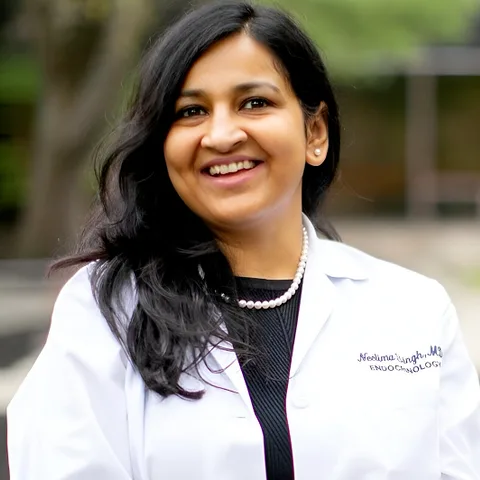
EndoHarmony is Dr. Singh's solo direct-care endocrinology practice, run on a membership or fee-for-service basis with a deliberately small panel. She caps it at roughly 300 patients rather than the 3,000 of a traditional clinic. Menopause care sits inside a broader endocrine practice, so menopause management with hormone replacement therapy runs alongside thyroid disease, osteoporosis and bone density screening, PCOS, lipid disorders, diabetes and medically supervised weight management. Most visits are virtual, with in-person days on Fridays at the Westborough office and Thursdays by appointment at a second Natick location. New patients start with a short video meet-and-greet before registering, and members get sixty to a hundred and twenty minute appointments, unlimited secure messaging and round-the-clock outreach for urgent concerns.
Kristine Groemping is a family nurse practitioner and former Navy officer who started out in labor and delivery nursing and later worked as a menopause specialist at Evernow. She founded this small cash-pay practice, which treats perimenopause and menopause along with weight management, thyroid conditions and low libido in women. She is openly against pellets, pricey supplements and frequent hormone lab testing, and follows Menopause Society guidelines for estrogen, progesterone and testosterone. Most care happens by video, with refills handled by video or secure message, and she also sees patients at an office in southwest Austin. New patients can request a first hormone, testosterone or weight consultation online, and the booking page also offers a free introductory call.
Adrian Thompson runs Vida Women's Health on her own, so every visit and message is with her. She started the practice after her own perimenopause, when her OB-GYN told her she was too young for hormone therapy. Visits run 60 minutes and happen mostly by video, with in-person visits also offered in Falls Church City. She prescribes FDA-approved bioidentical estrogen, progesterone and testosterone through your regular pharmacy, and steers away from compounded hormones and unneeded lab panels. Most patients use a one-year visit package that includes six visits and direct messaging, though single visits are available. She also sees breast cancer survivors and BRCA previvors, working with their oncology team on hormonal or non-hormonal options.
Ignite Health is a solo, telehealth-only practice run by Kiesha Katsares, a Menopause Society Certified Practitioner who also holds a Certificate of Advanced Education in Obesity Medicine. Every new patient starts at the same entry point, a twelve-week concierge program that evaluates hormones, metabolism, weight, sleep, mood, energy and sexual health. It includes secure messaging throughout and ends in a follow-up visit where the patient picks a continued-care track. Those tracks range from pay-as-you-go follow-ups to a membership that folds routine primary care in with hormone and metabolic management. She specifically takes women with complex histories, including a history of breast cancer, and will use non-hormonal options and coordinate with oncology when hormones are not appropriate.
Dr. Moayedi is a Dallas OB/GYN who specializes in complex family planning and runs her own small practice. Her perimenopause and menopause care happens entirely by video, and she reviews your history and explains the science behind the treatment plan. Between visits you can text her directly with questions. Most patients need one or two follow-up visits to adjust doses, then a yearly visit to keep refills going. Prescriptions go to whatever pharmacy you choose. The practice doesn't take insurance, but it works with nonprofit funds to help Texas patients cover visit costs.
Dr. West is an internist who runs a small concierge primary care practice in Fairfax with a strong focus on women's health. Members get unlimited unrushed visits and can reach her directly by cell phone or text, with telehealth visits when appropriate. Her menopause and perimenopause care is only offered to members, not as a one-off consultation. She is a certified clinical densitometrist who has read thousands of bone density scans, and she once directed the Inova Women's Comprehensive Health Center. The practice has paused new members and even its waitlist for now, but you can sign up for updates on when it reopens.
Prévant Health is Erin Phamvan's own virtual practice, and every visit happens by video. It runs as a 12-month membership with a long first visit, quarterly follow-ups, and texting with Erin between visits. Menopause care is built around detailed lab work and shared decisions about hormones, alongside thyroid, heart and metabolic care. She is also trained in an Alzheimer's prevention program and folds brain-health risk into her plans. Although the mailing address is in Nashville, the practice currently sees patients only in a set of other states, and Tennessee is not one of them. You keep your own primary care provider for in-person exams and urgent needs.
Gisele Thissen runs WISH on her own as a fully virtual practice, so every visit happens by video and there is no office to walk into. Every new patient starts with the same long one-on-one assessment, which runs about an hour and covers symptoms, history, medications and previous treatment before anything is decided. She prescribes hormone therapy and women's testosterone where it fits the history, and she treats thyroid problems, metabolic and weight concerns, and sexual health complaints alongside the menopause transition. After the assessment she recommends either a six month course of care called Reclaim or a twelve month concierge year, and neither is required. She spent over a decade as a bedside nurse in obstetrics before moving into private practice, and she sees patients in Spanish as well as English. When an exam, imaging or a specialist is needed she helps arrange it locally and brings the findings back into the plan.
Diana Kumar is a board certified OB-GYN who co-founded Gliss Wellness, a virtual practice built around perimenopause and menopause. All care happens by video and secure messaging, so there is no office to visit. A menopause visit runs about 30 minutes and ends with a plan and prescriptions for an initial three month period, followed by a check-in visit before refills continue for the rest of the year. She prescribes hormone therapy when it fits, can order labs and scans, and sends prescriptions to the patient's own pharmacy. She also sees women for weight counseling and for urgent gynecology problems handled through a short written form. Her stated areas of interest are PCOS, sexual dysfunction, bone health and longevity medicine.
She is a urologist with fellowship training in sexual medicine who opened this practice in 2022 because short appointments left no room to hear a patient's whole story. She sees patients of all genders for arousal, orgasm and libido concerns, pelvic and genital pain, recurrent urinary infections and menopause. Vaginal estrogen is the treatment her practice leans on hardest for genitourinary syndrome of menopause, and her office helped get the boxed warning removed from low dose vaginal estrogen. The practice prescribes FDA approved medications and treatments unless one does not exist. New patients join an interest list rather than booking a slot, and the form lets you name a preferred physician from among her four colleagues but not her. Enough patients travel in from other cities that the site keeps a page of nearby hotels and airports.
Tammie Blair sees patients through Midi Health, a virtual women's health clinic that works by video only. She focuses on the hormonal changes of perimenopause and menopause, and names weight shifts, poor sleep, mood changes and painful sex as the symptoms those changes drive. A first visit runs about 30 minutes and ends with a written care plan, and follow-ups are shorter check-ins you can book as often as you need. Midi's hormone options are FDA-approved patches, pills, gels, creams and sprays, and a plan can also include vaginal estrogen, non-hormone prescriptions and GLP-1 medication. There is no office to visit, so Midi refers out anything that needs an exam such as a mammogram and asks you to keep seeing your own regular doctors. Her own page on the site has a booking link that starts a new patient with her.
Dr. Garavente runs a small solo menopause practice with offices in Timonium and Ellicott City, each open one day a week by appointment. She started it in 2018 after going through menopause symptoms herself, and she worked as an orthopedic physical therapist before medical school. She sees women in perimenopause and well beyond it, and says women over 60 are one of her favorite groups to treat. Hormone options include estrogen, progesterone and testosterone as creams, patches, pills or pellets, along with non-hormonal choices and GLP-1 weight care. She does not do well-woman exams, so you will need your own gynecologist for routine screening.
Dr. Wang is an internist who spent about 20 years in primary care and is also board certified in obesity medicine. She now sees women in perimenopause and menopause by video only, as an affiliate clinician of Dr. Heather Hirsch's Collaborative membership. Care runs through that membership, which has a one-year minimum and covers visits and messages with no charge per visit, plus group Q&As and coaching sessions. Her approach puts a lot of weight on nutrition, metabolic health and mindset alongside medical treatment. She asks patients to keep their own primary care doctor and gynecologist for hands-on care, since she does not see anyone in person.
Amanda Nossel is a nurse practitioner at a small independent OB/GYN office on the GBMC campus, and she is one of the two clinicians there taking new gynecology patients. Menopause visits can be booked in person or by video as a dedicated menopause consult. The practice sticks to FDA-approved hormones and tells patients plainly that compounded hormones and pellets are unregulated and can be risky. Before coming back to women's health she worked in labor and delivery for ten years and then in primary care, urgent care and behavioral health. Patient reviews often mention that she does not rush visits and remembers the people she sees.
Nefertari McClarity is a family nurse practitioner who runs a small virtual clinic for women in perimenopause and menopause. All visits are by video. Care starts with a long first visit and labs, then a second visit to go over results and set a plan. She prescribes hormone therapy including testosterone, offers non-hormonal options and GLP-1 medication for weight, and puts a lot of weight on gut health, with stool and SIBO testing available.
Melinda is a nutrition counsellor and cannot prescribe, so this is food and lifestyle support for the menopause transition and not hormone treatment. She mainly works with autistic, ADHD and AuDHD adults, and her approach is weight-inclusive and non-diet. Care begins with an introductory call and an assessment that covers health history, a menopause symptom questionnaire and a look at the supplements you already take. She takes no supplement affiliate or referral money. Sessions are weekly or every other week in downtown Bend or on Zoom, with messaging in between, and she expects to work together for at least five months. She came to this work through her own perimenopause and a late AuDHD diagnosis, and she also works with eating disorders at the outpatient level.
Dr. Carol runs a small concierge practice for women in perimenopause and menopause, and she is going through midlife herself. She spent about 20 years as an emergency physician before turning to menopause care. Care starts with a free 30-minute video call, then a package of two long visits, each 60 to 90 minutes, with messaging between and after them. Visits can be at her Manhattan office, by video, or at your home or workplace. The visits look at symptom treatment along with bone, heart and breast cancer risk. She does not replace your own doctors, so you still need a primary care doctor and a gynecologist for exams and mammograms.
Capital Women's Care DC is a group OB-GYN practice near Foggy Bottom, and Dr. Bajaj is the managing partner of the Washington office. She spent nearly two decades doing both obstetrics and gynecology, then stopped obstetrics in 2022 to practice gynecology only, with perimenopause and menopause as her focus. She says she wants to close the knowledge gap around hormone replacement therapy, and she writes publicly about women's health on a site of her own. You book online or by phone, and appointments can be in person or by video. Alongside menopause care the office does in-office procedures and minimally invasive gyn surgery, so a woman who needs both can stay in one place. Worth knowing is that the practice says an annual well-woman visit with the doctor of your choice usually takes one to three months to get.
Christine Hart Kress runs her own small menopause practice as a women's health nurse practitioner. New patients start with a short virtual menopause diagnostic call booked online. Visits are by video, and the only appointment she offers online is virtual. She has a doctorate in nursing and a long background in nursing leadership as well as clinical care.
A virtual women's specialty care platform for complex hormonal, metabolic and gynecological conditions, where menopause and perimenopause sit alongside PCOS, endometriosis, thyroid disease, fibroids and primary ovarian insufficiency. Each patient is assigned one medical provider, either an obstetrician-gynecologist, an endocrinologist or a women's health nurse practitioner, plus a registered dietitian, and stays with both. Care starts with a 30-minute medical visit and a 45-minute nutrition visit, broad hormonal and metabolic labs, then check-ins every week or two. Prescribing is optional and patient-directed, covering transdermal and oral estradiol, micronized progesterone, a non-hormonal drug for hot flashes, weight medication and thyroid replacement, and a separate arm ships custom-compounded medication to patients.
Dr. Tunson runs a virtual longevity medicine practice and spent about 14 years as an emergency physician before starting it. Women who want to focus only on hormones can buy a hormone package with labs, two hour-long visits and prescription management when it's indicated, or book a single hormone consultation. She also offers a test that estimates ovarian age and when menopause is likely to arrive. Her wider program is a multi-year plan built on extensive labs, genetics and imaging, and it is meant to sit alongside your regular primary care doctor rather than replace it. The practice is cash only and has opted out of Medicare, though Medicare patients are welcome to pay privately.