Menopause Specialists Who Accept Insurance in Maryland
100 practitioners have an office in Maryland, and 108 more can see patients here by telehealth. 131 of them are certified by the Menopause Society, and the most are in Bethesda, Rockville and Baltimore.
Takes Aetna, Blue Cross Blue Shield +1 · from $58/mo
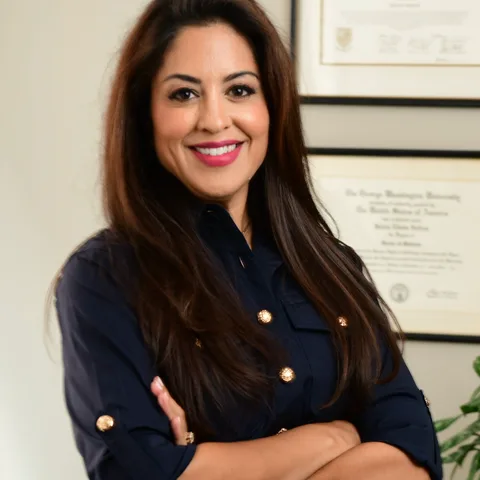
Dr. Enzmann is a gynecologist who left hospital practice in 2026 and now offers two kinds of care. At her Glen Burnie office she sees insurance-based gynecology patients on Friday mornings, including menopause assessments, HRT decisions and in-person care for vulvar and vaginal problems like lichen sclerosus and recurrent BV. Her private-pay functional medicine side runs mostly by video and starts with a paid discovery call, followed by lab-heavy programs with a set block of consults. She can prescribe hormones only for women located in Maryland and works with women elsewhere as a health coach who cannot prescribe. She prefers FDA-approved body-identical hormones over custom compounded ones and explains why on her site. She trained in Germany and speaks English, German and Spanish.
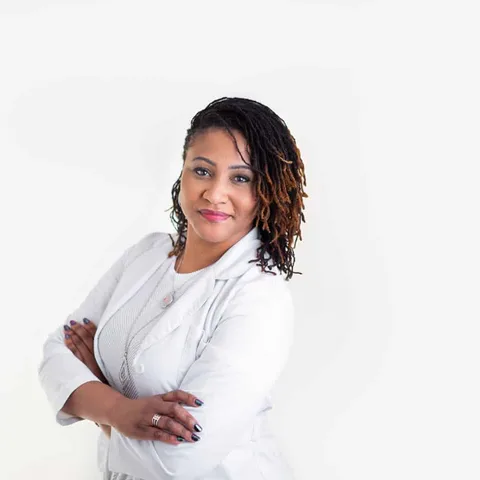
Tammie Blair sees patients through Midi Health, a virtual women's health clinic that works by video only. She focuses on the hormonal changes of perimenopause and menopause, and names weight shifts, poor sleep, mood changes and painful sex as the symptoms those changes drive. A first visit runs about 30 minutes and ends with a written care plan, and follow-ups are shorter check-ins you can book as often as you need. Midi's hormone options are FDA-approved patches, pills, gels, creams and sprays, and a plan can also include vaginal estrogen, non-hormone prescriptions and GLP-1 medication. There is no office to visit, so Midi refers out anything that needs an exam such as a mammogram and asks you to keep seeing your own regular doctors. Her own page on the site has a booking link that starts a new patient with her.
Takes Aetna, Blue Cross Blue Shield · first visit $100
Erin Langley runs a two location acupuncture and Chinese herbal medicine practice in Rockville and Silver Spring. Her site says she cares for women and girls at every stage and names perimenopausal and menopausal complaints like hot flashes, night sweats, brain fog and mood swings among what acupuncture can address. Treatment is acupuncture and custom herbal formulas, with cupping, gua sha, moxibustion or electro stimulation added when it fits, and she does not prescribe or manage hormone therapy. A first acupuncture visit runs ninety minutes and starts with a long conversation about health history before any needles go in. Herbal consultations can happen by video for people living in Maryland, and the formula is shipped to you. She spent over a decade in corporate maternal and women's health before going back to graduate school, and now sits on the board of the state acupuncture association.
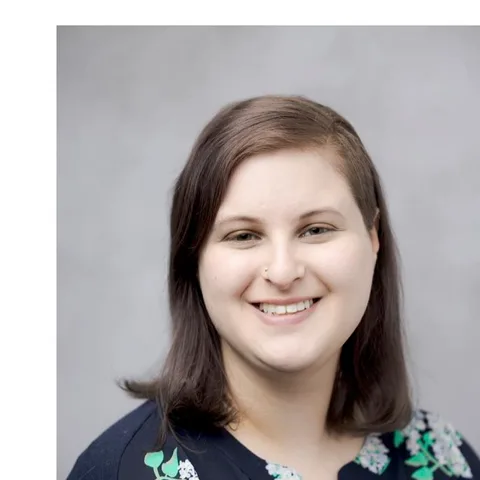
Amanda Nossel is a nurse practitioner at a small independent OB/GYN office on the GBMC campus, and she is one of the two clinicians there taking new gynecology patients. Menopause visits can be booked in person or by video as a dedicated menopause consult. The practice sticks to FDA-approved hormones and tells patients plainly that compounded hormones and pellets are unregulated and can be risky. Before coming back to women's health she worked in labor and delivery for ten years and then in primary care, urgent care and behavioral health. Patient reviews often mention that she does not rush visits and remembers the people she sees.
matriARC is Emery Ayers-Greenidge's solo telehealth practice in Baltimore, and she sees women anywhere in Maryland by video. She is a licensed psychologist, so the work is talk therapy rather than medication or hormone prescribing. Her focus is the whole reproductive lifespan, from fertility and pregnancy through pregnancy loss, motherhood, perimenopause and menopause. She is certified in perinatal mental health and also uses clinical hypnosis in her work. New clients start with a free 30 minute phone call to see whether it is a fit, and sessions run just under an hour, usually weekly at first. Her own site states plainly that it does not give medical advice and tells readers to see a physician for anything clinical.
Capital Women's Care DC is a group OB-GYN practice near Foggy Bottom, and Dr. Bajaj is the managing partner of the Washington office. She spent nearly two decades doing both obstetrics and gynecology, then stopped obstetrics in 2022 to practice gynecology only, with perimenopause and menopause as her focus. She says she wants to close the knowledge gap around hormone replacement therapy, and she writes publicly about women's health on a site of her own. You book online or by phone, and appointments can be in person or by video. Alongside menopause care the office does in-office procedures and minimally invasive gyn surgery, so a woman who needs both can stay in one place. Worth knowing is that the practice says an annual well-woman visit with the doctor of your choice usually takes one to three months to get.
A virtual women's specialty care platform for complex hormonal, metabolic and gynecological conditions, where menopause and perimenopause sit alongside PCOS, endometriosis, thyroid disease, fibroids and primary ovarian insufficiency. Each patient is assigned one medical provider, either an obstetrician-gynecologist, an endocrinologist or a women's health nurse practitioner, plus a registered dietitian, and stays with both. Care starts with a 30-minute medical visit and a 45-minute nutrition visit, broad hormonal and metabolic labs, then check-ins every week or two. Prescribing is optional and patient-directed, covering transdermal and oral estradiol, micronized progesterone, a non-hormonal drug for hot flashes, weight medication and thyroid replacement, and a separate arm ships custom-compounded medication to patients.
A nurse-practitioner-owned primary care and wellness practice in Fairfax, founded in 2012, with a second nurse practitioner and a small clinical team. Hormone care is aimed at midlife women from perimenopause through menopause and begins with testing, in-office blood work plus saliva or urine panels, before a plan that may combine nutrition, lifestyle work, herbal remedies, bioidentical topicals or hormone pellets. It sits inside a full primary care and women's health practice covering gynecological exams, contraception, urinary incontinence, thyroid disease and medical weight management, with visits in person or by video.
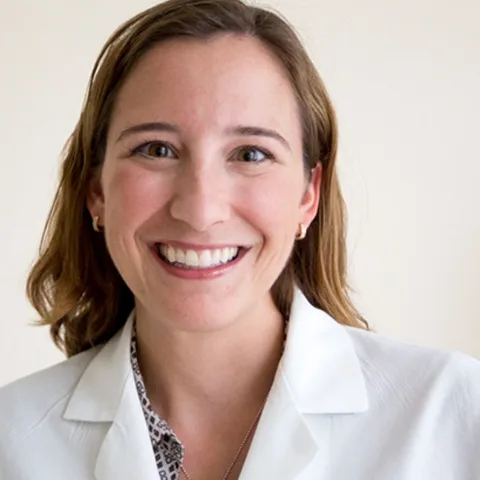
Catherine Scaletta sees patients by video through Midi Health, which lists her as a clinical leader. She is a women's health nurse practitioner who spent most of her career in outpatient OB-GYN offices, with a focus on sexual and reproductive health and breast care. She says she has cared for women in perimenopause, menopause and after menopause for fourteen years. A close family member went through triple-negative breast cancer in her early thirties, and helping her through a mastectomy, reconstruction and chemotherapy shaped how she thinks about individual care. She says the part she cares about most is building trust over time and meeting each woman where she is. Her page has no booking link of her own, so the Midi sign-up does not let a new patient choose her by name.
Beyer is a Midi clinical leader and sits on the company advisory board, and she still sees patients by video. She trained in obstetrics and gynaecology, then dropped obstetrics to work on gynaecology and hormonal health only. Weight is her second focus and she holds a diplomate from the American Board of Obesity Medicine. She talks openly about gaining weight before her 50th birthday and losing 35 pounds over five months, and she uses that with patients who are struggling. Care runs through Midi only, so visits are by video and anything needing an exam or imaging goes to an outside clinician. Her page has no booking link of her own, so the Midi sign-up does not let a new patient choose her by name.
Horton works in a four-office OB-GYN group affiliated with Anne Arundel Medical Center, and her bio lists the Pasadena, Annapolis and Waugh Chapel offices. She joined in January 2023 after several years in academic medicine, training residents and medical students at Temple and then at Johns Hopkins, and she added her menopause certification after that. Hormone replacement, perimenopause and menopause are among her listed interests, along with osteoporosis, colposcopy and minimally invasive surgery, so midlife care here sits inside ordinary gynecology rather than a separate menopause program. The practice says all of its providers take gynecologic patients, and a new patient fills out a secure online GYN packet at least 72 business hours before the visit or the appointment is canceled. Messaging, refills and appointment requests run through the MyChart portal once you are an established patient. She also speaks Spanish, which she studied on a course in Guatemala while she was in medical school.
Jo'Ann Jackson is an obstetrician gynecologist at Reiter, Hill & Johnson of Advantia, a women's health group with offices in Washington and Northern Virginia. She joined the practice in 2006 and is now one of its physician managers, and she sees patients at the Washington and Falls Church offices. Her own provider page names menopause care and hormone replacement therapy, which most of her colleagues' pages do not. Along with her Menopause Society certification she holds the Heather Hirsch Academy hormone therapy certification that Advantia put several of its clinicians through, and she is a practising physician member of the International Society for the Study of Women's Sexual Health. The practice menopause page covers hormone therapy, vaginal hormonal medication and non hormonal options such as low dose antidepressants. New patients self schedule online and fill in a health history in the portal before the first visit, and the Washington office runs Saturday morning clinics twice a month.
Winston is a board certified obstetrician gynaecologist at Boston Medical Center. She sees patients at two sites, the main Boston campus on Harrison Avenue and BMC Brighton. Her hospital listing places her in obstetrics and gynaecology along with labour, delivery and postpartum care, so her published work includes deliveries and not only office gynaecology. Boston Medical Center publishes nothing about menopause, perimenopause or hormone therapy for her, and her profile carries no specialties list at all, while a colleague at the same Harrison Avenue office does list menopause. Her menopause certification from The Menopause Society is current, but her employer's site gives no sign that she offers menopause care. She trained in obstetrics and gynaecology at Marshall University in West Virginia after earning her osteopathic degree in Tennessee.