335 practitioners have an office in Texas, and 109 more can see patients here by telehealth. 283 of them are certified by the Menopause Society, and the most are in Houston, Austin and Dallas.
Dr. McClure runs a small cash-pay gynecology practice in north Dallas focused on perimenopause, menopause, vulvovaginal conditions and sexual medicine. She practiced general obstetrics and gynecology from 2007 and moved to gynecology only in 2019 to concentrate on these problems. Visits are long, with an hour for the first appointment and 45 minutes for follow-ups. The first visit has to be in person, and after that telehealth is possible for patients located in Texas. She is a vulvovaginal specialist who treats lichen sclerosus, recurrent vaginal infections and vulvar pain, so she suits women whose menopause symptoms include genital pain or sexual problems other doctors have not solved. She does not handle fibroids, heavy periods, IUDs or abnormal Pap follow-up, so you still need a regular gynecologist for those.
Cibolo Family Medicine is a five physician direct primary care practice with offices in Boerne and northwest San Antonio, and Ashley Sommerhalder works out of the San Antonio office near The Rim. Members pay one flat monthly fee for unlimited visits and reach their physician directly by phone, text, email or video. Membership is not billed to insurance, so members tend to keep a separate plan for hospital care, specialists and imaging. She is the only Menopause Society certified practitioner on the team and describes advanced training in menopause and midlife women's health. The practice groups menopause and hormones under women's health, but the site never says which hormone treatments she prescribes. New members can sit down for a free in-office consultation at either office first, and Spanish-language help is available.
Dr. Durairaj runs a small concierge internal medicine practice in Westlake Hills that sees adults of all genders, with a particular focus on women in perimenopause and menopause. One annual membership covers menopause care along with primary care, unlimited office visits, same or next day appointments and direct messaging with her. She insists on a full history and a broad set of labs before any conversation about hormones, and she prefers FDA-approved hormones to compounded ones. She follows up to check that the plan still fits rather than prescribing once and moving on. Most visits are in person at her office, and video visits are an occasional add-on rather than the main way care happens. Members are asked to stay at least six months, and she also teaches at UT Austin's Dell Medical School.
ClubMeno is a concierge, membership-only women's health practice in the Dallas and Fort Worth area, founded and run by a menopause-certified family medicine physician. The twelve-month membership covers all visits, secure messaging with the physician, clinically indicated labs and self-scheduled follow-ups. The first visit is about an hour of history, labs and a care plan built with the patient. Care is hybrid, in person at the Little Elm office or virtual for Texas residents, and an unusual emphasis is musculoskeletal health, with in-person joint, muscle and recovery treatment offered alongside hormone therapy as a separate package. Prospective patients can book a twenty-minute discovery call before joining, and the practice does not see patients 65 or older.
Dr. Kinney sees women in north Dallas for perimenopause, menopause, sexual health and bone loss. She works as a consultant alongside your own doctor, so she does not do well woman exams, ongoing gynaecology care or after hours emergency care. She may start a medication for a short trial, but refills go back to your regular gynaecologist or primary care doctor. The first visit runs 45 minutes in person or by video, and she emails a written summary and plan afterwards, usually within two days. Bone health is a real second focus, and she will walk through a bone density result and the drug options in detail. She also takes vulvar pain consultations, and she is the sitting president of The Menopause Society.
Dr. Ashaye founded InTouch Primary Care in Sugar Land and is the only physician there. She is board certified in family medicine and in lifestyle medicine, and her site says she has specialized menopause training. Her menopause page works through non-hormonal options before it reaches hormone therapy, and it names the actual drugs and delivery routes she uses. Women can keep their own primary care doctor and buy menopause care on its own, or put both under one plan. Care runs on an annual membership that covers follow-up visits, prescription management and direct messaging with her. She also records a weekly health video on her own YouTube channel and holds free community talks on metabolism and menopause.
Precision FemCare is Dr. Ginsberg's own practice and every visit happens over Zoom, so a patient needs to be in Texas, New York or Tennessee at the time of her appointment. Everyone starts with a Core Diagnostic consult covering blood work, symptoms and any outside labs, and she will not prescribe hormones on symptoms alone. She uses compounded bioidentical hormones and deliberately avoids patches and pellets, because a fixed dose cannot be adjusted as hormone levels move. Nothing is done in person, so you keep your own gynecologist for pap smears, mammograms and well-woman exams. Her own schedule is at capacity, so new patients join her waitlist or start with one of the practice's nurse practitioners. She is a black belt, an Ironman finisher and a repeat Boston Marathon qualifier, and she uses AI tools and a digital twin of herself to keep guidance going between visits.
Dr. Knight runs a solo membership practice in the Creekside area of The Woodlands, with separate monthly programs for menopause care, medical weight loss and primary care. She is board certified in internal medicine and obesity medicine on top of her menopause certification, and she treats hormone changes and weight together instead of sending patients elsewhere for the metabolic side. The first visit is a full hour covering history, symptoms and past labs, and it ends with a 3D body composition scan she uses as a baseline. She offers bioidentical hormone therapy and hormone testing for women who are candidates. Members can text or call her directly, and every visit is with her rather than another clinician. She sees adults only, and she asks patients to keep seeing their own gynecologist for gynecological exams.
Dr. Ayim has run her own solo practice in west Houston for more than fifteen years, doing gynecology and cosmetic surgery in the same office. For midlife women she treats perimenopause and menopause with hormone replacement therapy, vaginal estrogen cream, non-hormonal medicines such as SSRIs, and bioidentical hormone pellets as a certified BioTE provider. Hormone care can be paid for visit by visit or taken as a monthly membership, which runs on a twelve month commitment and covers pellet insertions plus one lab panel a year. She also performs laparoscopic gynecologic surgery, so a patient who needs a hysterectomy or fibroid removal can stay with her. Her own bio puts nutrition and fitness at the center of how she works, and the office keeps an interactive screen in every exam room for patients to use during a visit. New patient forms are posted online to print and bring to the first visit.
Integrative medicine · MD, MSCP, ABOM, ABAARM, ABR
Accepting new patients
Dallas, TX · In person & virtual
Self-pay · first visit $850
A New Me MD is Dr. Ravipati's own practice in Dallas, and she is the only clinician the site names. She sees women for menopause and hormone care using bioidentical hormone therapy, and she also treats men for andropause and runs a weight track built around custom GLP-1 protocols. The first visit runs ninety minutes and covers history, symptoms, labs and biomarkers, with body composition measured when the visit is in person. New patients join a waitlist because her availability is limited, and the same form is where you choose which service you want. She trained as a diagnostic radiologist and still reads imaging done at other institutions. The practice is not a primary care office, so patients keep their own doctor for routine exams and urgent problems.
Obesity medicine · MD, Internist, DABOM, DABLM, MSCP
Accepting new patients
Frisco, TX · In person & virtual
Self-pay · first visit $400
Dr. Mittal runs a small membership practice in Frisco that treats menopause alongside weight and metabolic health. Obesity medicine is her main field and she is vice president of the Dallas Obesity Society, so midlife weight gain, blood sugar and heart risk get worked up as part of hormone care rather than sent elsewhere. A first menopause visit runs about an hour and covers symptoms, labs, body composition on an InBody scale and a written plan, and follow-up visits include texting access to her team in between. She prescribes FDA-approved hormone therapy in most forms, from patches and gels to vaginal estrogen, and will use compounded estrogen or progesterone when it fits, although her own FAQ tells patients the usual claims made for compounded hormones are unsupported. She also builds plans for women who cannot take hormones or would rather not. Any patient living in Texas can be seen by video, and she offers a free meet and greet before you commit.
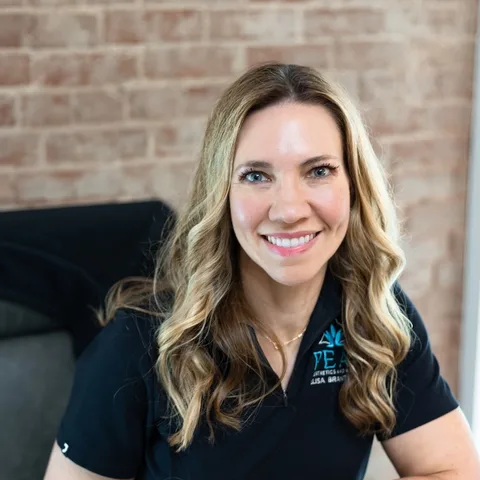
Peak Aesthetics and Wellness is a small downtown San Angelo practice where Dr. Brantly is the only physician and the rest of the staff are aestheticians, a medical assistant and a coordinator. She came to hormone care from urology, so alongside menopause she handles recurrent urinary infections, incontinence and painful intercourse. A first hormone visit runs about 40 minutes and covers your history, symptoms and a plan, and labs can be drawn in the office. She prescribes bioidentical hormones as pills, patches, gels, creams or pellets, and she writes plainly about keeping doses in a normal physiologic range rather than pushing them high. She makes a point of being a physician rather than a nurse practitioner working from a standard protocol, and says she will not give a big dose and a follow-up six months later. The other half of the practice is medical aesthetics, so the same visit can take in skin, hair and injectables.
Dr. Rhodes is a gynecologist who runs a small solo office in Webster near Galveston Bay, and menopause care and hormone therapy are part of her general gynecology practice. She stopped taking insurance at the start of 2025 and now posts a plain price list, with separate first and follow-up visits for hormone care by video. She sees women of all ages, with lower visit prices for patients 65 and older, and she also lists cancer survivorship and bone health among the conditions she treats. She says face-to-face care is best, so video visits are offered as a convenience rather than the main model. She has practiced since 1992 and also travels to rural areas that are short of doctors to see women there.
Dr. Moayedi is a Dallas OB/GYN who specializes in complex family planning and runs her own small practice. Her perimenopause and menopause care happens entirely by video, and she reviews your history and explains the science behind the treatment plan. Between visits you can text her directly with questions. Most patients need one or two follow-up visits to adjust doses, then a yearly visit to keep refills going. Prescriptions go to whatever pharmacy you choose. The practice doesn't take insurance, but it works with nonprofit funds to help Texas patients cover visit costs.
Taylored Wellness is Dr. Taylor's own practice and she is the only physician in it. Care starts with a long physician evaluation that pulls prior records, labs, family history and genetics into one picture, then sets an order for what to address first. She treats hormone change as one system among several, so the same plan may also take in metabolism, sleep, cardiovascular risk and cognition. Treatment can include prescription medication, hormone therapy, supplements, exercise prescription and intravenous or injectable therapies. She trained and boarded in emergency medicine before moving into integrative and functional medicine, and says the crises she treated there were never sudden. Two six-month precision health programs are described on the site but are still in development, so for now the way in is one private consultation.
Complete Midlife Wellness Center is a Houston practice founded in 2020 that sees only midlife women, across three offices and by video. Leah Love is one of its two physicians and is listed as the practice gynecologist, with eight nurse practitioners and two nurses making up the rest of the care team. Most of her career was in academic medicine, where she won awards for teaching, leadership and research, and she says she grew tired of putting a band-aid on illness that was preventable. She writes openly about food as medicine, including how she became anemic in college eating cheap processed food and fixed it by changing what she ate rather than by taking iron. Hormone care starts on one of two set routes, a shorter visit with a limited blood panel or a longer visit with a fuller panel and a follow-up visit built in. The practice names her for its unhurried 30 minute annual wellness exam, which it offers to existing patients only.
Dr Steininger, who goes by Dr Dani, runs a small menopause consult practice entirely by video for women who live in Texas or are in Texas at the time of the visit. She went into menopause at 35 as part of her own breast cancer treatment, and she says being a patient changed how she practices. First visits usually run an hour and follow-ups half an hour, and she talks through options from lifestyle changes to prescription hormones before adjusting doses over time. She works alongside your own gynecologist or primary care doctor rather than replacing them, and hands care back once treatment is steady. Women with irregular periods are asked to have a recent exam with their own gynecologist first. She also works with oncologists and invites women in cancer treatment to email her directly.
Dr. DeSplinter runs a solo direct patient care practice for midlife women in Spring, north of Houston, and sees patients across Texas by video, phone and secure message. She left traditional practice after her own patients began waiting months for an appointment, and she now keeps a small panel on a monthly membership that covers visits, office procedures, pelvic ultrasound and many generic medications. Hormone therapy is estrogen, progesterone and testosterone, and she says she has other options for women who cannot take hormones or would rather not. She also runs a medical weight program that uses GLP-1 drugs alongside quarterly body composition scans. She still operates, so hysteroscopy, laparoscopy and hysterectomy are done by her rather than referred out. Patients can keep their own gynecologist or primary care doctor if they want, and she has a soft spot for public school teachers and for seeing mothers and daughters together.
Dr. Krapf runs her own gynecology practice in South Tampa focused on vulvar and pelvic pain, vulvar skin conditions such as lichen sclerosus, recurrent vaginitis and menopause. She spent several years as an associate director at a Washington DC center devoted to vulvar pain before opening the Tampa office in 2023. Her site puts menopause alongside vulvar pain and skin conditions, so she is a natural fit for women whose menopause symptoms show up as painful sex or vulvar discomfort. She co-wrote the book When Sex Hurts and helps edit a medical textbook on female sexual pain. New patients start by emailing the office to request a consult, and her former DC patients can continue with her in Tampa.
Takes Aetna, Blue Cross Blue Shield +4 · first visit $150
MyMenopauseRx is a virtual menopause practice founded by a gynecologist, and Krantz is one of about a dozen clinicians a patient can pick from. Visits are video appointments of about thirty minutes, and most patients come back every eight to twelve weeks until their symptoms settle. She prescribes FDA-approved estradiol and progesterone rather than compounded hormones, and the practice is clear that it works alongside a patient's own primary care doctor rather than replacing it. Testosterone is written only for patients located in Illinois, and everyone else gets the prescription from their own doctor while the practice manages the dosing. Krantz has practiced for more than thirty years in university, HMO, community health and telehealth settings, and she completed the integrative medicine fellowship at the University of Arizona with training in medical acupuncture. She works from Oregon and says she has aged alongside her patients, which is how menopause care became her emphasis.
She is a board-certified psychiatrist who focuses on the mental health side of perimenopause. That means anxiety, low mood, irritability, poor sleep and brain fog that arrive in midlife. Care is online only and starts with a free 15-minute call and a long intake, then follow-ups that blend medication and lifestyle work. Medication can include antidepressants, sleep support, non-hormonal options for hot flashes, and estrogen and progesterone when they fit. She says she aims for the least medication that gets a real result. She spent 12 years in the military, including as medical director of an inpatient mental health unit.
Dr. Allison runs a small telemedicine practice for women in perimenopause and menopause. She spent 14 years as an emergency physician before moving into midlife women's care. She prescribes FDA approved hormone therapy and testosterone, and offers non-hormonal medicines for women who can't or won't take hormones. New patients fill out long history forms first, then have a 75 minute first visit and a short check-in two weeks later. She also covers bone health, breast cancer risk and prevention planning. She does not replace your primary care doctor or gynecologist, and she expects you to keep them.
Diana Kumar is a board certified OB-GYN who co-founded Gliss Wellness, a virtual practice built around perimenopause and menopause. All care happens by video and secure messaging, so there is no office to visit. A menopause visit runs about 30 minutes and ends with a plan and prescriptions for an initial three month period, followed by a check-in visit before refills continue for the rest of the year. She prescribes hormone therapy when it fits, can order labs and scans, and sends prescriptions to the patient's own pharmacy. She also sees women for weight counseling and for urgent gynecology problems handled through a short written form. Her stated areas of interest are PCOS, sexual dysfunction, bone health and longevity medicine.
Takes Aetna, Blue Cross Blue Shield +15 · from $17/mo
Lindsay Botsford is a family physician at One Medical's BLVD Place office in Houston, which is a general primary care practice and not a menopause clinic. Her own page on the One Medical site says she is a Menopause Society Certified Practitioner, and most of her Houston colleagues' pages carry no such line. The office page says you can book online without a membership and that visits are billed to you or your insurance. She is also a regional medical director for One Medical across Texas and the Midwest, and she still keeps her own panel of continuity patients. Her page has no booking link of her own, so the One Medical sign-up does not let a new patient choose her by name. Nothing on the site says what One Medical prescribes for menopause.