Intentional Wellness Center is a small Redding practice led by two physicians, Dr. Warren and Dr. McClelland, and hormone care sits alongside weight management and the center's aesthetic and surgical work. For menopause they use bioidentical hormones given as pellets, creams, injections or capsules, picked after a full lab panel and a symptom review. The first consultation runs about an hour, labs are rechecked around week six and then yearly, and pellet appointments come round every four to six months. Follow-ups are monthly in the first few months and spread out once things are steady. Women need an up to date mammogram and gynecological exam before they can start hormone therapy. There is no online booking, so a new patient starts by calling or emailing the office.
Dr. Molloy is a gynecologist at the Banner University Medicine Women's Institute in central Phoenix. Her focus is the menopause transition, sexual health and vulvar conditions. She also treats pain with sex, vulvodynia and vulvar skin conditions such as lichen sclerosus. She sees adults in the office and by video, and she speaks Spanish and English. She teaches medical students and residents and likes patients to make decisions about their care together with her. Appointments are made by phone, as online booking is only open to returning patients.
Emily Medley is a licensed nurse practitioner who prescribes, and she pairs that with clinical hypnosis. She founded a small Houston practice for women, and her own menopause page described shared decision-making on lifestyle changes, bioidentical hormone therapy and non-hormonal options. Medical visits there ran under a named collaborating physician, while the hypnosis, Reiki and energy work sat in a separate non-medical business she also owns. Offering hypnosis as a non-drug route for hot flashes is unusual here, and it is the thing a patient would remember about her. Her practice website has been offline since the middle of 2025 and the domain is now parked for sale, so her prices, intake process and availability cannot be checked today. A provider profile at Katy Wellness Center and Family Physicians still names her for women's health and menopause care, and that clinic looks like the live way to reach her.
Dr. Patel is a gynecologic surgeon who has practiced in Fredericksburg since 2005 and runs a small gynecology office with two nurse practitioners. Menopause care happens in person at the Fredericksburg or Spotsylvania office, and the practice bills insurance. The practice is a Biote provider, so hormone pellets placed under the skin every few months are a main option, with oral progesterone added from a regular or compounding pharmacy. It also sells Biote supplements. Dr. Patel is known locally for robotic hysterectomy, so this is a practical choice if you may also need gynecologic surgery. The office is taking new patients, who book by phone and get a registration link before the first visit.
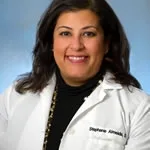
Stephanie Almeida, DO is a board-certified obstetrician-gynecologist at Jefferson OB/GYN Mayfair, a Jefferson Health practice on Frankford Avenue in Philadelphia, formerly Einstein OB/GYN Associates. Her provider page lists menopause, perimenopause and vaginal dryness among the conditions she treats and hormone replacement therapy among her treatments. She practices full-scope obstetrics and gynecology, with a stated interest in high-risk pregnancy and irregular cycles including PCOS, and also sees patients at the Lawndale and Paley offices.
Dr. Doherty is a family physician with Penn Medicine Lancaster General Health who sees patients of all ages at her Queen Street office in Lancaster. She is certified by the Menopause Society, so midlife hormone care sits inside her regular primary care practice rather than a separate clinic. She also holds certifications in lifestyle medicine and HIV medicine. Her stated approach is to learn each patient's values and priorities and make decisions together, since the right choice is rarely the same for everyone. New patients can book a first visit online through the health system's scheduling page.
Luke Roberts is an obstetrician and gynecologist in the MaineHealth group, which runs offices across Maine. He sees patients at the group's Portland office on Bramhall Street, listed as his primary office, and at its Scarborough office. The practice covers routine gynecology exams, preventive screening, birth control and sexual health, pregnancy and birth, and menopause and healthy aging. MaineHealth's menopause pages name both of the offices he works from and describe care for hot flashes, sleep trouble, mood changes and vaginal dryness. For hormone therapy the group describes estrogen, progesterone or a combination, weighs the risks with each patient, and advises the lowest effective dose. Bone loss after menopause is treated as part of the same care, and visits, messages and test results run through the MyChart patient portal.
Carolyn Bernstein is a headache neurologist at the Osher Center for Integrative Health in Chestnut Hill, which is the Brigham's integrative medicine clinic. The Mass General Brigham profile describes a practice built on migraine and headache disorders, backed by a subspecialty certification in headache medicine. The profile lists membership of the North American Menopause Society and names hormonal headache among stated interests, but no page Mass General Brigham publishes describes menopause care or hormone therapy as care delivered here. The clinic's own service list runs to acupuncture, chiropractic care, massage, mindfulness training, health coaching and neurological conditions with headache called out, and names no menopause or hormone care at all. The Brigham's menopause programme sits in a different suite of the same building and is staffed from gynecology and endocrinology. Bernstein wrote The Migraine Brain and teaches neurology residents and Harvard medical students.