519 practitioners have an office in California, and 126 more can see patients here by telehealth. 386 of them are certified by the Menopause Society, and the most are in San Francisco, Newport Beach and San Diego.
Trinitas is a small primary care practice for the whole family, and Dr. Yanni is its physician. She is board certified in both internal medicine and pediatrics, so one doctor can see a mother and her children. Menopause care sits inside the women's health visit, with hormone therapy as one of the options. She writes that she has been a cancer patient herself, and that it taught her how much being listened to matters. The practice bills insurance as a regular office, and an optional concierge membership for PPO patients adds longer visits and same-day or next-day access. Video visits are listed only as a concierge perk and only within California.
Lim Women's and Urologic Health is a small virtual practice run by Dr. Lim out of Santa Cruz. Her site says she is the first and only fellowship trained female urologist and urogynecologist in Santa Cruz County. Care is built around longer visits and direct contact with her instead of a packed clinic schedule. The focus is menopause and hormonal health, recurrent urinary tract infections, vaginal and pelvic health, and preventive urologic care. She says plainly that the practice is not for emergencies or for anything that needs an in person exam right away. The practice has not opened for booking yet, and new patients join a waitlist.
Dr. Correia is a board-certified OB-GYN who runs a small private clinic that also sees men and offers primary care, weight loss and longevity medicine. Menopause care is one of several services, with its own program built around bioidentical hormones in cream, patch and oral forms. A first visit starts with a hormone panel and a review of symptoms and history. Follow-up labs come about six to eight weeks later, and doses are rechecked every three to six months. The clinic does not take insurance and does not offer online booking, so new patients call to schedule. Visits can be in the Pismo Beach office or by video, and a nurse practitioner also sees patients there on Thursdays.
Dr. Azad founded this practice at El Camino Hospital in Mountain View in 2009, and it still runs under her own medical corporation. It is a small all-women group of obstetrician gynecologists who share hospital duties and do their own deliveries, so an obstetric patient sees each doctor at least once during pregnancy. The gynecology side covers menopausal symptoms, PCOS, endometriosis and a full surgical list that runs to robotic and laparoscopic hysterectomy and fibroid removal. The practice was the first office in Mountain View to offer the MonaLisa Touch, a carbon dioxide laser for vaginal atrophy, and it keeps a narrow probe for women left with a constricted vagina after severe menopause or breast cancer treatment. No page names hormone therapy as something the practice prescribes, and her own bio gives her interests as infertility, PCOS and weight rather than menopause. New patients fill in a registration packet before the first visit and can book online.
Women to Women is a two doctor obstetrics and gynecology practice in a medical office building on San Vicente Boulevard in Los Angeles. Christina Adberg runs it with one other physician. The website is a single page about directions, parking and billing rather than about the care, so it names no treatments anywhere. What the practice handles shows up mainly in its billing policy, which has separate sections for surgery, pregnancy and fertility treatment. New patients start by downloading the registration and policy forms the practice posts online. The office does not validate parking and says so plainly on its own front page.
Dr. Dombo is a board-certified OB-GYN who is going through the menopausal transition herself. She says starting hormone therapy and changing her nutrition and supplements took her from exhaustion and poor sleep back to enjoying life, and that is why she does this work. She trained in the early 2000s, when hormone therapy was widely feared, and now calls it the gold standard for symptom relief. The first visit runs 60 minutes and covers medical and gynecologic history, medications, nutrition and exercise, then a personal treatment plan. The visit also lists a nutritionist assessment, an exercise plan and mindset coaching, and follow-ups run 25 minutes. She writes publicly about why menopause hits Black women harder and how often they face barriers to care.
Dr. Pollycove runs a solo integrative gynecology practice in San Francisco and sees women from adolescence into their eighties. Menopause is the center of the practice, and hormone therapy is prescribed using oral estrogen, estradiol patches, gels and sprays, with natural progesterone for women who still have a uterus. New patient visits are booked for a full hour, and phone appointments are offered and charged like office visits. Several pages of the site argue that news coverage of the 2002 Women's Health Initiative frightened women away from estrogen that would have helped them. Breast care is the other long-running interest, and ongoing cancer survivor care is named among the services. Gynecologic surgery is no longer performed after twenty years of it, and patients needing surgery are referred to other surgeons while Dr. Pollycove stays involved in the counseling and recovery.
Oh Bloom Gyn is the Tustin gynecology office Dr. Diana Tran-Kim opened after five years in an Orange County multidisciplinary group. Perimenopause and menopause care sits at the front of the site, framed around sleep, concentration and comfort with intimacy rather than a symptom checklist. Hormone replacement therapy has its own service page, and the practice's one journal article is written in the first person about the signs that make hormone therapy worth a conversation. Alongside gynecology the office runs its own device suite, including an intravaginal Femilift laser used for dryness, laxity and leaking, and a pelvic floor chair for urinary leaking. A supervised weight programme prescribes semaglutide or tirzepatide with the medication included, and minimally invasive laparoscopy and hysteroscopy are named as work Tran-Kim and a second physician do. Visits are arranged by phone, text or a request form, and a nurse practitioner and a physician assistant also see patients.
This is a small concierge practice built around long, unhurried visits and a low number of patients. Dr. Greenwald focuses on perimenopause and menopause, hormone therapy and sexual health. She trained at UCSF, built her practice with Stanford Health Care, still teaches there and works on the obstetrics side at Santa Clara Valley Medical Center several days a month. Care runs through a membership, and visits can be in person or by video. She is not taking new patients right now. Two colleagues in the same practice, Dr. Nazaneen Homaifar and Dr. Sarah Isquick, are certified menopause providers and are taking new members.
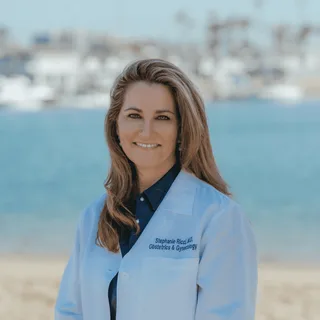
Newport Beach OB/GYN Medical Group is a two physician practice on Hospital Road next to Hoag Hospital, where Dr. Ricci has been affiliated for more than seventeen years. She trained at Chicago Medical School and did her residency in Chicago, and her bio says she has provided prenatal care for over 5,000 babies. Most of her work is obstetrics, high risk pregnancy and minimally invasive gynecologic surgery, and the practice menopause page is written around her by name. That page treats hormone replacement therapy as the option for severe symptoms rather than the starting point, and estrogen is given as a pill, patch, gel or spray. For the vaginal dryness and tissue changes that follow menopause the office also runs a fractional CO2 laser program, usually three or four sessions with annual maintenance after that. Three physician assistants see patients alongside the two doctors, and there is an optional hybrid concierge tier with direct phone and text access and limited enrollment.
Dr. Queen trained in emergency medicine and spent about twenty years in Bay Area hospitals before opening her own concierge practice. Menopause care runs as a six or twelve month membership with an evaluation, follow-up visits, secure messaging and an in-office bone density ultrasound scan. She prescribes hormone therapy when it fits and pairs it with functional medicine and nutrition, and two nutritionists work with the practice. GLP-1 weight medication can be part of the plan for women whose metabolism shifted in midlife. The practice does not bill insurance but gives free superbills for out-of-network claims. Visits can be in person in Mill Valley or by video.
Dr. Hannon is an OB-GYN who runs this Inner Richmond practice with her father, Dr. Ziyad Hannon, and a nurse practitioner who is also a Menopause Society certified practitioner. The practice describes its care as trauma-informed, and Dr. Hannon is an outspoken advocate for LGBTQ patients, including gender-affirming surgery. For menopause they prescribe patches, gels, pills and vaginal estrogen, with micronized progesterone, and they also offer nonhormonal options such as Veozah. Testosterone and other libido medications are available when low desire is the main concern. Labs are used only when they are clinically needed. Visits are in person, and new patients can request an appointment online or by phone.
West Coast OB/GYN is a group practice with offices in San Diego, Carlsbad and La Mesa, and Dr. French is one of the providers who work only out of the La Mesa office. The group does full obstetric and gynecologic care, and its gynecology list includes menopause and hormone replacement therapy. Her own bio says she follows women from adolescence through childbirth to menopause and beyond, and that she is drawn to minimally invasive surgery. She came to women's health first as a counselor for rape and domestic violence survivors and for women with eating disorders, then decided to go to medical school. New patients download registration and history forms from the site and send them in ahead of the visit. The practice keeps some evening hours and draws blood in the office.
Dr. Howe is a board certified OB/GYN at a small Newport Beach practice she runs with a second OB/GYN and several physician assistants. The practice covers the full span of gynecology, and perimenopause and menopause care sit alongside hormone testing, osteoporosis and bladder problems. Her particular interest is chronic pelvic pain, which she researched at UCLA and treats both medically and surgically. Before moving to Orange County she chaired an OB/GYN department in Ventura County and built a clinic there that included menopause management. She speaks Spanish. Visits are in the office and billed through insurance, and patients without insurance pay at the time of service.
Chun co-founded this two-doctor gynecology practice in Laurel Village and still sees patients there. She says what drew her to the field is following one woman through her whole life, from childhood through the reproductive years and into postmenopause, and her practice runs that broad. Care is in person at the California Street office, and new patients start by phone and by filling in the registration and gynecology intake forms the site posts. The practice takes a firm line on compounded bioidentical hormones, saying the doses are not regulated so a woman may not get a consistent amount, and it prefers the few bioidentical hormones made by regulated manufacturers. For dryness and painful sex the office prescribes topical estrogen as a ring, a tablet or a cream. Both doctors speak Mandarin and Cantonese, and the second office at Daniel Burnham Court has closed so everything now runs out of Laurel Village.
Pause for Rest is Dr Khavarian's solo practice in Newport Beach, built around menopause and the insomnia that often comes with it. She is a board certified internist who moved into women's health after years of managing general medicine, and she names menopausal care and the treatment of insomnia as her own focus. Care starts with an evaluation of what is driving the sleep disruption and the other midlife symptoms, and from there she uses hormonal or non-hormonal treatment plans. The site gives a long section to how progesterone calms the brain and steadies body temperature, which is the clearest statement of how she thinks about hormones. There is also a separate Midlife Clarity Consultation for women who feel unlike themselves and want a longer conversation before deciding anything. The practice sells two of its own sleep and calm supplements through its website.
Bove is a UCSF neurologist who sees patients at the Multiple Sclerosis and Neuroinflammation Center at Mission Bay. The conditions her clinic profile lists are multiple sclerosis, neuromyelitis optica and optic neuritis, and she offers video visits alongside the clinic. She founded UCSF's Sex And Gender-Enriched Neurology program, which tries to make neurological care account for pregnancy, menopause and other hormonal transitions. Most of her menopause work is research. She led the first randomized trial in menopausal women with MS and has written more than 25 papers on how estrogens and testosterone affect the course of MS. Before medicine she studied anthropology and spent several years travelling on a Fulbright grant doing ethnographic film work, and she speaks French and Spanish.
Dafna Trites is an ob-gyn at Facey Medical Group's Tarzana ob-gyn office, part of the Providence system. Her own profile lists a full ob-gyn scope, from pregnancy and delivery through menopause, urinary incontinence and pelvic prolapse surgery, so this is a general ob-gyn practice rather than a menopause clinic. She sees adults and older adults and speaks Spanish as well as English. New patients can book either an office visit or a video visit with her. Ongoing care runs through the Providence MyChart portal, where you message your care team, book visits and request refills. Reviews on her own profile mention long waits for a routine appointment.
This is a solo OB-GYN office in Beverly Hills where menopause care sits alongside general gynecology and obstetrics. He sees women from young adulthood through later life, so a patient can stay with one doctor as her needs change. The first visit covers history, symptoms, weight, blood pressure, a physical exam and lab work. Hormone therapy is designed for each patient and can be a pill, patch, lotion, spray, injection, vaginal tablet or ring, or a pellet placed under the skin. He pairs it with diet and exercise counseling and refers out when needed. He sits on the Medical Executive Committee at Cedars-Sinai, where he trained.
Bloom Wellness MD is Dr. Griffin's own integrative practice in Roseville, built around perimenopause and menopause care. She spent 10 years in family medicine and 11 years in integrative and functional medicine at Sutter Health before opening it, and she is fellowship trained at the University of Arizona's Andrew Weil Center. Her first choice for hormone therapy is FDA-approved bioidentical products such as estradiol patches, gels, sprays and rings, and she turns to compounded hormones only when a commercial product cannot meet a patient's dosing or ingredient needs. The practice does not provide primary care or urgent care, so you need to keep your own primary care physician. New patients can book a free 15-minute call first, and the initial visit runs a full hour. A certified health coach is available for optional one-on-one sessions on nutrition and elimination diets.
Dr. Kim is a board certified obstetrician gynecologist who now runs a consultation practice at the Joy Collective in Boulder and also sees patients by video. She has given up performing surgery and attending deliveries so that visits can be longer, and a first appointment runs 60 to 90 minutes. Her menopause and perimenopause work covers hot flashes, mood, genital and urinary symptoms, brain fog, sleep, and hormone and weight concerns, though the site does not name the treatments she uses. She also sees teenagers, pregnant and postpartum patients and people going through fertility treatment, and she manages depression, anxiety, trauma and addiction with mindfulness practices alongside prescribing. Her approach comes from training as a Mindfulness Based Childbirth and Parenting instructor, and she teaches small mindfulness groups as well as seeing patients. Anyone new can start with a free fifteen minute meet and greet by phone or video.
Michelle Barhaghi is the only doctor listed at The Group for Women, a small obstetrics and gynecology office in Aurora. The practice lists its services under headings that include yearly exams, family planning, pregnancy care, mid-life woman changes and gynecologic surgery, and the mid-life heading covers bladder control problems and management of perimenopausal and menopausal concerns. She is a certified Biote provider, and the hormone care is described as the Biote Method of bioidentical hormone replacement therapy. She is double board certified in obstetrics and gynecology and in integrative medicine, and she says she weighs lifestyle, environment and relationships when considering treatment options. Much of her surgical work is minimally invasive treatment of fibroids, ovarian cysts and other pelvic disorders, and she names endometriosis as a special interest. She grew up in Aurora and went to school here before training in New York and New Orleans, and she also displays a certification in treating urinary incontinence with the InTone device.
Dr. Baron runs her own integrative and functional medicine practice on the Upper East Side, and she sees adult women, men and older adolescents for primary care alongside menopause care. New patients are invited into a secure email portal and fill out an initial health history before the first visit, which is a long history review followed by a physical exam. A gynecological exam, if the patient wants one, usually waits for the second visit. She relies heavily on diagnostic testing and often orders functional medicine panels on top of standard fasting labs, and she sells supplements through her own dispensary. Stress is her other focus, and she thinks it drives much of what she sees, so she teaches patients breathing techniques, meditation and basic yoga and has written a book about it. She is also trained in the Bredesen Protocol and runs memory programs for people with cognitive decline and for prevention.
The Marigold Survivorship Medical Clinic is a telemedicine practice for women affected by breast cancer, and Caroline Cook founded it and runs it on her own. She was diagnosed with triple positive breast cancer at 37, went through chemotherapy and abrupt premature menopause, and says she built the clinic because she could not find the care she wanted anywhere else. Care covers menopause management including hormone therapy, sexual health, recurrence risk reduction and the long term health effects of breast cancer treatment. She still works as a board certified emergency physician, holds board certification in lifestyle medicine, and tells patients that medication is not a failure alongside lifestyle change. Everyone starts with a free fifteen minute call to see whether the fit is right, and the intake visit that follows runs up to ninety minutes after she has spent about a week reviewing oncology records. She cannot prescribe testosterone to patients in California or Washington because of DEA rules, and she will see women without breast cancer on a case by case basis.