100 practitioners have an office in Maryland, and 108 more can see patients here by telehealth. 131 of them are certified by the Menopause Society, and the most are in Bethesda, Rockville and Baltimore.
A virtual women's specialty care platform for complex hormonal, metabolic and gynecological conditions, where menopause and perimenopause sit alongside PCOS, endometriosis, thyroid disease, fibroids and primary ovarian insufficiency. Each patient is assigned one medical provider, either an obstetrician-gynecologist, an endocrinologist or a women's health nurse practitioner, plus a registered dietitian, and stays with both. Care starts with a 30-minute medical visit and a 45-minute nutrition visit, broad hormonal and metabolic labs, then check-ins every week or two. Prescribing is optional and patient-directed, covering transdermal and oral estradiol, micronized progesterone, a non-hormonal drug for hot flashes, weight medication and thyroid replacement, and a separate arm ships custom-compounded medication to patients.
Dr. Tunson runs a virtual longevity medicine practice and spent about 14 years as an emergency physician before starting it. Women who want to focus only on hormones can buy a hormone package with labs, two hour-long visits and prescription management when it's indicated, or book a single hormone consultation. She also offers a test that estimates ovarian age and when menopause is likely to arrive. Her wider program is a multi-year plan built on extensive labs, genetics and imaging, and it is meant to sit alongside your regular primary care doctor rather than replace it. The practice is cash only and has opted out of Medicare, though Medicare patients are welcome to pay privately.
CaliberMD is Dr. Belardo's own virtual practice for women in midlife, and she treats menopause symptoms and weight together instead of in separate appointments. She is certified in both obesity medicine and menopause care, and she writes openly about her own perimenopause and weight changes. Care runs as a six-month membership that starts with a 60-minute first visit and a nutrition planning session, then moves to monthly video follow-ups with portal messaging in between. She prescribes menopausal hormone therapy when it fits and also works with women who would rather not take medication. The practice does not do primary care, so you need to keep your own primary care doctor. A free Meet and Greet call is available before you sign up.
Dr. Holt runs a small private-pay practice for women, mostly by telehealth with in-person visits in Manhattan. Every new patient starts with a paid assessment that includes a long intake visit, an extended lab panel and a second visit to go over the results. Hormone care for perimenopause and menopause then runs as a three-month program or a monthly membership with a monthly physician visit and portal messaging. She is board certified in preventive medicine and lifestyle medicine and also trained in functional medicine. Her site puts unusual weight on the nervous system, and names breathwork, somatic trauma work and faith as part of care. Her blog describes adjusting estrogen and progesterone slowly and changing the form or timing when a woman reacts badly at first.
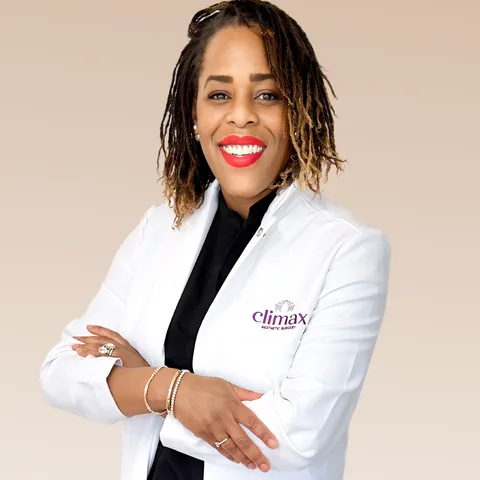
Dr. Ojo-Carons founded Climax Aesthetic Surgery, a sexual health and cosmetic gynecology practice with offices in Virginia Beach, Columbia in Maryland, and New York. She is a gynecologist who also trained in cosmetic gynecologic surgery, so much of the practice centers on sexual function, urinary leakage and vaginal dryness alongside hormone therapy. Hormone care starts with a symptom review and lab testing, and she prescribes bioidentical hormones, estrogen, progesterone, testosterone and pellets. Pellet therapy is sold as a yearlong membership that covers the insertions and lab work. New patients usually begin with a discovery call, and virtual consultations can be booked online. The practice treats men as well as women and also offers injectables and other aesthetic work.
Ackerly McBride Group is a small concierge primary care practice in northwest Washington, with five physicians and two physician assistants. Each provider offers an annual membership that covers the yearly physical, the lab work that goes with it and a wellness visit, and each one keeps a limited panel. Dr. Hart is a family physician who sees adolescents and adults, and she also teaches at Georgetown, where she is a professor of family medicine and runs the primary care leadership track. The practice says she became a Menopause Society Certified Practitioner after she joined, and it lists her expertise as evidence-based primary care, family medicine and women's health. It does not name menopause or hormone treatment for her anywhere on the site, and the only provider whose expertise line reads menopause and perimenopause is her partner Dr. Lucy McBride. New patients start with the practice's inquiry form, and her own panel has been on hold while her schedule is set.
Krystal Algier is a nurse practitioner with a small self-pay practice in Easton that offers hormone and weight care alongside aesthetic skin treatments. Women usually start with a short one-on-one clarity session. If more care makes sense, she moves on to a full hormone evaluation with a history review, lab work and a written plan. She sees patients in person in Easton and by telehealth in Maryland, Delaware and Florida.
Therapy for Midlife is Dr. Rashkis's solo virtual practice, and every session runs over video. She works with women moving through perimenopause and menopause, and she also sees men in midlife and couples. Care is talk therapy only, and the FAQ says the practice does not prescribe medication, though she will discuss a referral to a prescribing physician and can speak with your own doctor if you give written permission. For menopause she uses cognitive behavioral therapy for the distress that comes with hot flashes and CBT for insomnia for sleep trouble, alongside acceptance and commitment therapy and emotionally focused therapy. Sessions are 50 minutes, usually weekly at first and then spaced further apart, and she says most clients need five to fifteen of them. She is a lifelong competitive athlete who says she went through her own midlife upheaval, which is what led her to start the practice.
Dana Johnson is a registered nurse who spent about 20 years in the ICU before founding Qavah Functional Wellness, a telehealth-only practice. She started it after her own Long COVID turned into autoimmune and gut problems and then a hard menopause transition. Hormone therapy is offered to Alabama residents only, while the lab and gut health services also reach a few other southern states. Each hormone plan starts with lab work and a consultation, and bioidentical hormones come as creams, gels, pills, troches or injections. Prescriptions are written by the practice's licensed providers rather than by Dana, who is a nurse. New patients start with an online consultation request, and the team calls back within one business day.
A nurse-practitioner-owned primary care and wellness practice in Fairfax, founded in 2012, with a second nurse practitioner and a small clinical team. Hormone care is aimed at midlife women from perimenopause through menopause and begins with testing, in-office blood work plus saliva or urine panels, before a plan that may combine nutrition, lifestyle work, herbal remedies, bioidentical topicals or hormone pellets. It sits inside a full primary care and women's health practice covering gynecological exams, contraception, urinary incontinence, thyroid disease and medical weight management, with visits in person or by video.
Orama Wellness is an online psychology practice that Linda Kondilis founded in Atlanta after years of work in reproductive mental health. Care here is talk therapy rather than medical care, and nobody on the team prescribes hormones or orders labs. The perimenopause service is about coping with sleep trouble, anxiety, brain fog, pain and changes in sex and relationships. Most of the practice is fertility and third party reproduction work, with cancer support and couples counseling alongside it. New clients request a first appointment through the practice's booking portal, and she offers a free phone consultation before starting.
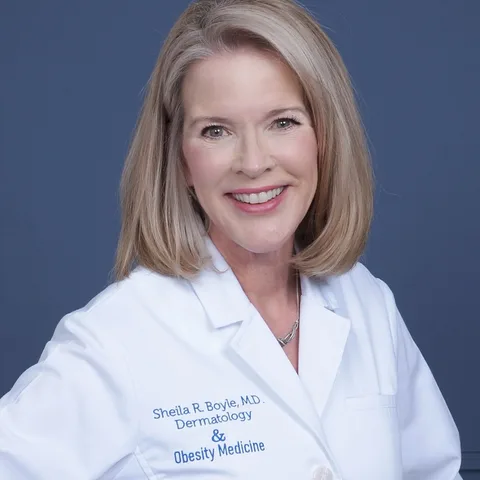
A solo direct-pay practice in Lone Tree whose stated scope is dermatology, cosmetic procedures and medically supervised weight management. The physician is board certified in dermatology and obesity medicine. Every initial visit is by video, with in-person follow-ups by appointment, and the practice does not bill insurance. Hormone replacement therapy is named only as one reason for a new-patient visit on the fee schedule, and no hormone or menopause care is described anywhere else on the site.
Maureen Luthardt runs Manage My Menopause on her own as a telehealth practice, and a patient has to be physically in Maryland when her visit takes place. She came to menopause care through years of nursing women with cancer who were pushed into menopause early by their treatment, and she writes that she felt for them but was not then in a position to help. Her hot flash page names FDA approved estrogen with progesterone as the main treatment, with low dose SSRIs and Veozah for women who want something hormone free. Bone health and breast cancer risk assessments are bookable as visits of their own, separate from a general menopause visit. She keeps two short clinic windows a week, on Thursday and Saturday afternoons, and everything is booked through her own online calendar.
Caitlin Givens is one of two providers at Takoma Park Gynecology, a small woman-owned gynecology practice run by nurse-midwives. The practice covers care from adolescence through menopause and beyond, and it does no pregnancy care. A new patient can book with her online, either as a full new patient visit with an exam or as a menopause consultation that is a conversation only. She prescribes FDA-approved hormone therapy, including estrogen, progesterone and testosterone, and uses compounded hormones only when a manufactured product is unavailable or a poor fit. Beyond menopause she works in sexual medicine and chronic vulvar conditions, and the practice also handles bone health and prescription weight management. Her interest in women's health began as a Peace Corps volunteer in northern Senegal, and she teaches nurse-midwifery and women's health students at Georgetown.
IntimMedicine Specialists is a small Washington DC practice that Dr. Simon founded and still runs as medical director, with two physician assistants who have worked with him since the 1990s. He treats women across the whole reproductive span, and the midlife side of the practice covers menopause and perimenopause, low testosterone, bone loss, sexual pain and sexual function after cancer. His approach to hormones is to balance estrogen, progesterone and testosterone, and the practice says most women can use hormone therapy with few risks. For testosterone he will use gels, injections or pellets, and he says he does not treat on lab values alone. Visits happen in the M Street office or by video, and virtual appointments are offered on Saturday mornings as well as weekdays. New patients submit a form or call and the office rings back to finish booking, and because the practice runs its own clinical trials some patients are offered a place in a study.
Gliss Wellness is a virtual-only OB/GYN practice Dr. Walsh co-founded with a second board-certified OB/GYN, and menopause care is its main focus. Care starts with a 30-minute video consultation about your symptoms, and if hormone therapy suits you, you leave with prescriptions for the first three months. A follow-up at three months keeps refills going for the rest of the year, and refills in between happen by message through the patient portal. There is no membership, and you fill prescriptions at your own pharmacy. The doctors can't examine you in person but can order labs and other tests. Dr. Walsh's own interests include pelvic pain, endometriosis, fibroids and weight loss, and a free 15-minute call lets you meet the team before booking.
Catherine Scaletta sees patients by video through Midi Health, which lists her as a clinical leader. She is a women's health nurse practitioner who spent most of her career in outpatient OB-GYN offices, with a focus on sexual and reproductive health and breast care. She says she has cared for women in perimenopause, menopause and after menopause for fourteen years. A close family member went through triple-negative breast cancer in her early thirties, and helping her through a mastectomy, reconstruction and chemotherapy shaped how she thinks about individual care. She says the part she cares about most is building trust over time and meeting each woman where she is. Her page has no booking link of her own, so the Midi sign-up does not let a new patient choose her by name.
Beyer is a Midi clinical leader and sits on the company advisory board, and she still sees patients by video. She trained in obstetrics and gynaecology, then dropped obstetrics to work on gynaecology and hormonal health only. Weight is her second focus and she holds a diplomate from the American Board of Obesity Medicine. She talks openly about gaining weight before her 50th birthday and losing 35 pounds over five months, and she uses that with patients who are struggling. Care runs through Midi only, so visits are by video and anything needing an exam or imaging goes to an outside clinician. Her page has no booking link of her own, so the Midi sign-up does not let a new patient choose her by name.
Jennifer Lanoff is the only clinician at washGYN, a small Washington practice she runs for menopause, perimenopause and complex gynecology. She prescribes estrogen, progesterone and testosterone using FDA approved products, and offers non-hormonal options such as fezolinetant, SSRIs, gabapentin and oxybutynin for hot flashes. Visits run long on purpose, and every new patient fills in a medical history questionnaire first so the office can pick the right length of visit. She spent more than two decades as a lawyer, including a stretch as a Deputy Trial Chief at the Public Defender Service for the District of Columbia, before training in nursing at Johns Hopkins and Georgetown. Many of her patients arrive with overlapping conditions such as endometriosis, POTS, MCAS and Ehlers-Danlos, and the partner surgical practice sends its non-surgical cases to her. She is the only clinician here who can be booked online, and she also sees established patients by video in six states.
Jo'Ann Jackson is an obstetrician gynecologist at Reiter, Hill & Johnson of Advantia, a women's health group with offices in Washington and Northern Virginia. She joined the practice in 2006 and is now one of its physician managers, and she sees patients at the Washington and Falls Church offices. Her own provider page names menopause care and hormone replacement therapy, which most of her colleagues' pages do not. Along with her Menopause Society certification she holds the Heather Hirsch Academy hormone therapy certification that Advantia put several of its clinicians through, and she is a practising physician member of the International Society for the Study of Women's Sexual Health. The practice menopause page covers hormone therapy, vaginal hormonal medication and non hormonal options such as low dose antidepressants. New patients self schedule online and fill in a health history in the portal before the first visit, and the Washington office runs Saturday morning clinics twice a month.
Online Benign Gyne is Dr. Todd's own telehealth practice, and every visit happens by video. She sees women for contraception, breast concerns, vaginal and vulva problems, menopause and facial skin care, and consultations and referrals are part of what she offers. Her site carries long plain-language explainers on hormone therapy, PCOS, urinary infections and breast exams. She is a New Orleans native and a military veteran who served during Operation Desert Storm and later at Walter Reed Medical Center. She says she especially enjoys caring for older women because she has faced the same changes herself. New patients can pick a video slot through the practice's own online scheduler.
Dr. Dombo is a board-certified OB-GYN who is going through the menopausal transition herself. She says starting hormone therapy and changing her nutrition and supplements took her from exhaustion and poor sleep back to enjoying life, and that is why she does this work. She trained in the early 2000s, when hormone therapy was widely feared, and now calls it the gold standard for symptom relief. The first visit runs 60 minutes and covers medical and gynecologic history, medications, nutrition and exercise, then a personal treatment plan. The visit also lists a nutritionist assessment, an exercise plan and mindset coaching, and follow-ups run 25 minutes. She writes publicly about why menopause hits Black women harder and how often they face barriers to care.
Carrie Pagliano is a pelvic floor physical therapist, so this is hands-on and movement-based care and she does not prescribe. Her site lists the pelvic floor and bladder changes of perimenopause and menopause, including painful sex, among the things she treats. Visits are in person in Arlington or by video, and she says most plans of care run four to six visits. She uses external ultrasound imaging, fits pessaries, and says an internal exam is never required. Anything outside her scope she refers on to a network of medical providers she has built over 25 years in the DC area. She also teaches clinicians and runs courses and a podcast, but patients can book her directly.
ANOVUL is a Pittsburgh practice where Kelley DeFilippis sees only women in perimenopause, menopause and the years after. Care starts with a free 15-minute call, then a 90-minute new patient visit, with hour-long follow-ups in the office or by video. She prescribes FDA-approved bioidentical hormones, usually estradiol through the skin with oral micronized progesterone, and her site explains why she does not use pellets. She came to this work through her own perimenopause symptoms after finding her training had barely covered it. Beyond symptom relief she watches heart, bone and metabolic health, and the practice works alongside a pelvic floor therapist.