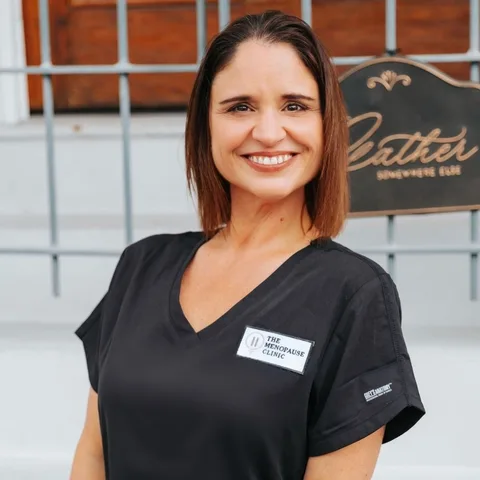
Intima Wellbeing is a solo practice in Findlay with a second office in Tiffin. Bethany Parsell is a urology and family nurse practitioner who treats women and men for hormone changes, pelvic floor problems and sexual health concerns. Hormone care covers perimenopause and menopause alongside testosterone deficiency, and she prescribes bioidentical hormone therapy or non-hormonal options depending on the patient. First appointments run 45 minutes to an hour and follow-up visits run at least 20 minutes. She also does pelvic floor muscle training, bladder and pelvic floor botox, and sacral neuromodulation for leaking and pelvic pain. Partners can be seen at the same visit when a concern affects both people.
Corvallis Family Medicine is an independent family practice that has looked after Corvallis families for over 30 years. Angie Bean is one of four clinicians the practice names for women's health, and the clinic lists evaluations for menopause or abnormal bleeding among that care. Well woman exams, pap and pelvic exams, contraception including IUD and implant placement, and endometrial biopsy are all done in the office. The clinic has its own lab and x-ray on site, which keeps blood draws and images in the same building. Patients can fill in a perimenopause and menopause questionnaire through the clinic's online forms. Bean also has specialty training in headache and migraine care, and the practice keeps a psychiatrist and two mental health therapists on staff.
Dr. Gray is an OB/GYN at University Health Women's Care in Lee's Summit, part of Kansas City's public hospital system, and she has been medical director of University Health Women's Care since 2021. She says she focuses her practice on menopause and sexual medicine, and she is one of only two clinicians the system lists under menopause medicine. The clinic's menopause page describes care built from lifestyle changes, hormone therapy using estrogen, progesterone, testosterone or DHEA cream, and non-hormonal options for women who should not take hormones. It also cites evidence that starting hormone therapy before age 60 may help the heart, which says something about how early she is willing to treat. Sexual health is a real part of the work, and she sits on two membership committees of the International Society for the Study of Women's Sexual Health. Visits are in person and booked by phone with no online scheduling, and new patients fill out a gynecology questionnaire and a family cancer history form before the first appointment.
Amy Bingaman is a gynecologist who sees patients at a clinic in West Des Moines and at women's health clinics inside five small Iowa hospitals. She provides full spectrum gynecologic care and lists perimenopause and menopausal care among her main professional interests, along with bioidentical hormone replacement therapy. She spent 8.5 years in the Navy, where she did her OB/GYN internship and residency, then returned to Iowa about 15 years ago. A large part of her public profile is speaking work, including a menopause talk called Hot Flashes and Hot Takes. New patients can book an OB/GYN visit online for the West Des Moines clinic, and the hospital clinics take appointments by phone, with one stating that no referral is needed. Her own website is built around the speaking side of her work, so it says nothing about what a visit costs or how care is run.
Dr. Gonzalez is an OB-GYN with Sutter Medical Group in Elk Grove and sees women of all ages. Her profile lists menopause and perimenopause among the conditions she treats, and she holds the Menopause Society certification. Most of what her page describes is gynecologic surgery, and she favors minimally invasive options such as robotic hysterectomy, myomectomy and endometrial ablation when surgery is needed. She says she puts weight on preventing gynecologic cancers and conditions. Her page does not say which menopause treatments she prescribes. Visits are in person only, she speaks conversational Spanish, and new patients book through the Sutter site or by phone.
Dr. Lane is a urogynecologist who leads gynecology and menopause care at The Practice Healthcare, a Beverly Hills practice best known for plastic surgery and a medspa. Bladder leaks, prolapse and painful sex are at the center of her work, and she treats them alongside hot flashes and other menopause symptoms. She prescribes standard and bioidentical hormone therapy and vaginal estrogen, and testosterone for low libido when it is indicated. For women who have had cancer, she gives hormone guidance when the usual options are off the table and works with their oncology team. Care starts with a consultation that reviews your history and goals, and surgery is rarely her first recommendation.
Klemens is an OB/GYN at Jefferson Health's Willow Grove office, which was Womencare Obstetrics & Gynecology before Jefferson took it over. She is one of ten clinicians Jefferson lists on its menopause care team, and her own page names menopause and perimenopause among the conditions she treats. This is a general OB/GYN practice rather than a menopause-only one, so hormone therapy sits alongside pap tests, fibroids and gynecologic surgery in what she does. Jefferson's menopause program starts with a full evaluation before deciding between hormone therapy and non-hormonal treatment, and it says plainly that the timing of when you start hormones matters. New patients can book online without phoning first, and her booking page offers a telemedicine first visit as well as an in-office one. She also sees patients at Jefferson's Abington office and delivers at Jefferson Abington Hospital.
Sharon Orrange is a primary care internist with Keck Signature Care, the concierge medicine program of Keck Medicine of USC, and she sees patients at its Beverly Hills office. Menopause hormone therapy is one of her research subjects, along with GLP-1 drugs, prediabetes and metabolic syndrome. Care splits between annual wellness visits, which cover screening and risk counseling, and primary care visits for chronic conditions and immediate problems. She is a diplomate of the American Board of Obesity Medicine, so weight and metabolic health sit inside her everyday practice rather than in a separate program. The Beverly Hills office keeps weekday daytime hours and offers telehealth appointments. She also studies telemedicine in primary care and how drug prices affect whether patients keep taking their medicines, which is an unusual thing for a working primary care doctor to spend time on.
Dr. Nouriel runs one of the few solo OB-GYN private practices in New York City, on the Upper East Side, and sees every patient herself at each visit. She is a Menopause Society certified practitioner and prescribes hormone replacement therapy when it suits the patient, with non-hormonal options offered alongside it. Her menopause work reaches past symptom relief into muscle, bone and heart health, with exercise and nutrition built into the plan. She is also a minimally invasive gynecologic surgeon and performs many procedures in her own office instead of sending patients elsewhere, and she delivers at Lenox Hill Hospital. She worked as a biomedical engineer in medical device development before medicine, and she now teaches as an assistant professor at the Zucker School of Medicine. Visits are booked online and the office reviews a patient's insurance benefits before confirming the appointment.
Jackie Stone, MD sees women entirely by telehealth, in a practice she runs alone. She is board certified in obstetrics and gynecology and in obesity medicine, and treats perimenopause, menopause and primary ovarian insufficiency alongside PCOS, genitourinary symptoms, sexual wellness, and skin and hair changes. First visits run a full hour and cover past records, labs and a treatment plan. Ongoing care is by monthly membership or visit by visit, with direct messaging for members.
Tosha Ulmer is a family nurse practitioner at Amend Healthcare, an independent family medicine clinic in Fargo. Menopause is her special focus, and she prescribes hormone therapy for perimenopause and menopause symptoms. She has close to 25 years in healthcare and also does medical and cosmetic Botox. Because the clinic is family medicine, she can also be your regular primary care provider and see the rest of your family. The clinic gives patients cozy robes instead of paper gowns and says it never rushes visits. New patients can book a visit with her online.
A practice devoted entirely to perimenopause, menopause and women's sexual health for women from their mid-thirties on, with a nurse practitioner as the sole treating clinician and a physician as medical director. Care begins with a 60-minute evaluation, after which prescribing, refills, lab orders and dose changes continue only through a monthly membership, with most adjustments handled by structured symptom updates in a portal rather than repeat appointments. Patients must be in Louisiana for every interaction, and the practice does not take on general primary care, pregnancy or fertility care.
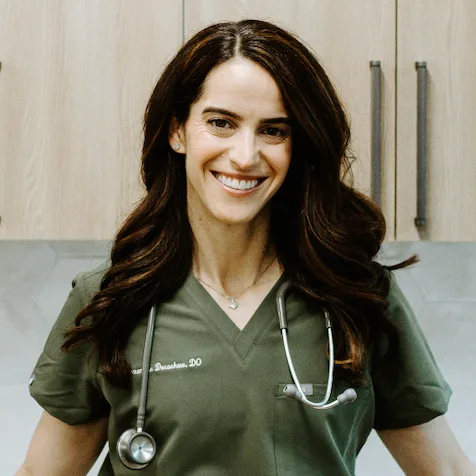
Dr. Doroshow runs a small membership primary care practice for adults in Ambler. She is a family physician and holds the Menopause Society certification. Menopause care is a 12-month program covering symptom review, bloodwork, hormone or non-hormonal treatment, and follow-ups in the office or by video. New patients start with a free meet and greet, and members can text her directly between visits.
Dr. Moon is a gynecologist who founded and owns New Moon in Carmel, and her own bio says she specializes in menopause management alongside minimally invasive gynecologic surgery. Her practice is a full OB-GYN office, so many patients have seen her for years through pregnancies and annual exams before reaching menopause. She talks with patients about hormone therapy for perimenopause and menopause symptoms in office visits. The practice also offers in-office radiofrequency treatment for vaginal dryness and urinary leakage, which she performs herself. Diagnostic mammograms can be done in the same office through a radiology partner. New patients call the office to schedule.
Tanya Smith is a nurse-midwife who moved from pregnancy and birth care to looking after women in perimenopause and menopause. Her practice is entirely by video, and you need to be in Connecticut at the time of each visit. She prescribes FDA-approved bioidentical hormones, testosterone and non-hormonal options, and would rather treat by symptoms than by hormone blood levels. Nutrition and fitness are a big part of her care, with glucose monitor coaching and a workout app. She talks openly about going from overweight to winning a bikini competition at 47 in the middle of perimenopause. New patients book online and fill in intake forms before the first visit.
Dr. Oberman co-directs UCLA Health's Comprehensive Menopause Program, where she leads its education work, and she also keeps a general obstetrics and gynecology practice at the Westwood OBGYN office. New patients fill out a health questionnaire before the first visit that takes 30 to 45 minutes and is due a week ahead, so the consultation itself can go straight to symptoms and treatment. The first visit also screens bone, breast, cognition, heart, mood, sleep and genitourinary health, and anything needing a specialist is handed to another UCLA clinician rather than managed in the menopause clinic. Hormone therapy is offered alongside non-hormonal options such as gabapentin and fezolinetant, and the program schedules a yearly health assessment after that. Outside menopause she has a particular interest in women planning a trial of labor after a cesarean, and she was the lead gynecologist on UCLA trials using estriol in multiple sclerosis.
Women's Health Consultants is a Novi OB-GYN office and one of a dozen practices in the UWH of Michigan group. Eight doctors work out of the Novi location, and Dr. Kaplan is one of them. Menopause care sits alongside pregnancy, surgery and routine gynecology rather than running as its own program, so the same office covers everything from teen visits through postmenopause. The group's menopause page goes through hormone therapy and non-hormonal prescription options and says the right choice depends on your history and risk factors, and it treats bone and heart health as part of midlife care. Mammography and bone density testing are done in the office rather than sent out. Kaplan taught residents at Providence Hospital and was named teacher of the year twice, and she names alternatives to hysterectomy as one of her main interests.
A solo naturopathic practice in Portsmouth, New Hampshire where Dr. Bottrill runs a dedicated perimenopause and menopausal health track alongside general integrative medicine, medical weight management, IV nutrient therapy and vitamin injections. First appointments run 60 to 75 minutes with a full health history and a brief physical exam, and follow-ups are booked by length from fifteen to sixty minutes, in person or by telehealth, with every appointment type and fee published on the online booking page. She prescribes bioidentical hormones through either a commercial or a compounding pharmacy, and for women who are not candidates for hormone therapy or do not want it she offers herbal medicine, nutritional supplementation, and diet and lifestyle work. New-patient telehealth is limited to New Hampshire residents. Anyone out of state must be seen in person first to establish care.
A solo nurse-practitioner practice treating women in perimenopause and menopause, plus weight and metabolic care, seen by telemedicine across Arizona with in-person visits in Tucson on Thursdays. Every patient starts with a 75-minute consultation preceded by a fasting lab panel, then chooses a time-bound program. One is six months of hormone care with four follow-ups. The other is a twelve-week medically supervised weight program. The hormone program includes the cost of estradiol, progesterone and testosterone shipped from a specialty pharmacy, and thyroid work where indicated. The practice does not provide primary care or gynecology, asks patients to keep their own doctor for those, and does not use pellets.
Capital Region Women's Care is a gynecology only practice with offices in Troy and Clifton Park and a team of five clinicians. Its services list includes menopause care alongside annual exams, ultrasound, contraception and in office procedures, though no page describes which hormone treatments are offered. Dr. Bloss is the practice's surgeon and performs robotic and laparoscopic hysterectomy, fibroid removal, ovary removal and endometriosis surgery. He has a particular interest in chronic pelvic pain and belongs to the International Pelvic Pain Society. His bio says the births of his six children shaped how he practices and that he spends a lot of time talking things through with patients. Current patients can book annual exams, problem visits and injections online, but new patients still have to call the office to get established.
Suzette Widdison Iverson is a physician assistant who runs her own practice for women in midlife, with menopause care and medical weight loss as its two main services. First visits run up to an hour, and she orders labs first when they would help. She prefers FDA-approved bioidentical hormones, uses compounded formulas only in select cases, and does not use pellets. Visits are by telehealth in Washington and Utah, with in-person visits at her office in downtown Gig Harbor.
East Cascade Women's Group is a Bend obstetrics and gynecology practice running since 1980, with a second clinic in Redmond and about twenty clinicians on its roster. Its menopausal care page gathers menopause management, hormone replacement therapy, postmenopausal bleeding, atrophic vaginitis, fibroids, urinary incontinence and pelvic relaxation, and says its providers are experienced with the issues around hormone imbalance. Dr. Hulbert went to an osteopathic medical school before a traditional OB/GYN residency, and she says the osteopathic habit of treating a patient as a whole person is what drew her to the work. Her own bio names no clinical interests, so what is known about her hormone and menopause care comes from the practice pages rather than from her. Menopause care is spread across the group rather than run by one person, with three of its physicians, a nurse practitioner and a nurse midwife naming it among their interests. The practice says it is always accepting new patients, and a physician is on call around the clock for urgent problems.
Julie Murphy is both a family nurse practitioner and a psychiatric nurse practitioner, so she manages hormone therapy and mental health care together in one plan. Care is virtual for patients in New Mexico and New York. New patients start with a free intro call and a long first consultation, then continue on a membership or with single visits. She prescribes bioidentical estrogen, progesterone and testosterone and adds one hormone at a time to see how each is tolerated. Sexual health and vaginal comfort are covered in every hormone consult, and she gives patients direct contact between visits. She came to menopause care after struggling to get answers during her own perimenopause, and earlier worked for Indian Health Services.
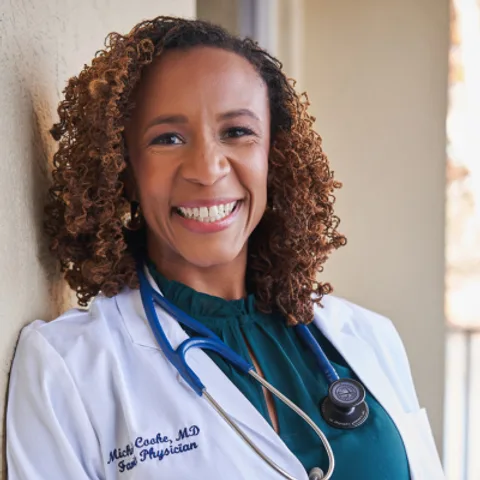
A physician-owned direct primary care practice and med spa in East Point, built around Black women's health while welcoming all patients from age 12. New patients begin with a standalone physical that includes annual labs and a body composition scan, then choose a monthly plan giving six visits a year, unlimited telehealth and direct text, phone and portal access to the physician. Menopause and perimenopause care is one of six service areas and includes hormone therapy, alongside gynecology, chronic disease management and physician-guided weight care. The higher tier bundles a monthly aesthetic treatment for melanin-rich skin into the membership.