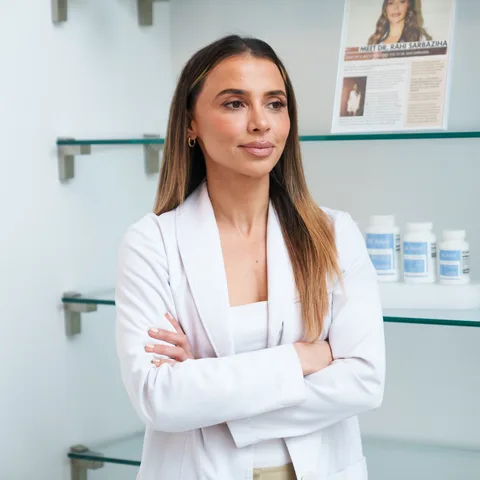
Dr. Rahi runs a solo med spa on Rodeo Drive called The Aesthetic Room, where cosmetic treatments sit alongside hormone and weight care. She trained in internal medicine and calls her practice integrative aesthetics, and she expects hormone patients to combine that care with her peptide and IV treatments. For hormones she uses bioidentical estrogen, progesterone and testosterone, and she also adjusts thyroid and cortisol, starting with lab testing and following up with monitoring. Her own FAQ says delivery can be a cream, an injection or a pellet depending on your needs. The weight program runs on semaglutide and tirzepatide, and she offers a non-surgical vaginal treatment using radiofrequency, laser or platelet-rich plasma for post-menopausal dryness and mild stress incontinence. The only appointment you can book with her by name online is a Zoom consultation, and the rest of the care starts from there.
Dr. Kurss is an OB-GYN at Invision Health, a large multi-specialty group in Williamsville outside Buffalo. Its doctors in neurology, pain, primary care, physical therapy and other fields all share one medical record. He does some gynecologic procedures in the office, such as endometrial ablation for heavy periods, so patients can skip a hospital stay. He teaches residents as a clinical assistant professor at the University at Buffalo. His practice bio doesn't mention hormone therapy directly, though the group's other OB-GYNs list menopause care. New patients book through the main scheduling line.
Viva Wellness is Liliana Damron's solo telehealth practice, so the first visit and the follow-ups are with her. She covers perimenopause and menopause, testosterone, medical weight management and minor sick visits, all by video. Her starting point is history and goals, and she orders labs when a test can answer a question rather than running a hormone panel on everyone. She will not prescribe hormone therapy as a weight-loss treatment and says midlife weight change needs its own evaluation. Compounded hormones are an option only when an FDA-approved product cannot meet a documented need, and the site repeats that compounded drugs are not FDA-approved. She came to this after years in geriatric care, which she says made her want people to ask these questions earlier.
Dr. Semby is a naturopathic doctor who works mostly with midlife women and with women worried about their long-term brain health, including those with dementia in the family. She came to medicine in her 40s after a career in finance, and she went through menopause and breast cancer herself. She says hormone therapy is one part of menopause care and not the whole of it, and she treats it as an individual decision. She is open to discussing hormones for women whose history makes the decision harder, such as breast cancer or heart disease. Care runs as a six-month program with eight physician visits and direct messaging between visits, or as a one-time baseline assessment with labs. She sees patients at her Carlsbad office or by video.
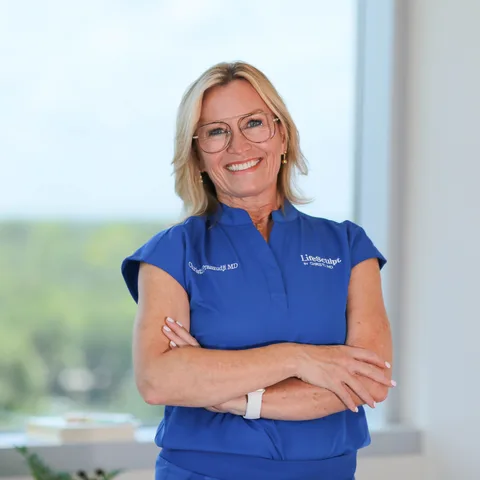
Dr. Christi founded this Houston practice in 2014 and runs it as two arms in one building, a urogynecology and surgery office and a separate longevity, hormone and aesthetics clinic a few suites down. She is a board certified urologist who spent her career in female urology and urogynecology, so prolapse, urinary incontinence, overactive bladder and recurrent urinary tract infections are her core work, and she has her own treatment pathway for interstitial cystitis. Hormone care for perimenopause and menopause runs through a year long concierge program with two tiers, built on an 80 marker blood panel and quarterly dose adjustments. The hormone pages describe bioidentical estradiol, progesterone and testosterone delivered as pellet implants, transdermal creams or sublingual troches, and say she inserts the pellets herself. The menopause page markets the practice as not a pellet mill, while the hormone pages put pellet implants first, which is worth knowing before a visit. She wrote a book on aging called The BioVitality Blueprint, and the practice says she and her husband use the same hormone therapy it prescribes.
Stateline Health is a Martinsville cardiology and vein practice that also runs a small internal medicine side, and Karen Garrett is the provider there who takes care of menopause. She co-founded the practice in 2017 with the cardiologist and has been a PA since 1999, starting her career in women's health. She writes that she is living through menopause herself, and that she wants women to get accurate current information and understand their treatment options. Her internal medicine visits also cover thyroid disease, blood pressure, diabetes and contraception, and the practice runs a cash pay weight loss program using compounded semaglutide and tirzepatide. New patient applications for internal medicine are paused right now, although the practice is still taking new cardiology and imaging patients.
Dr. McManus is a naturopathic physician at Health Moves, a clinic of several naturopathic doctors in Woodinville. Her stated focus is women's health, perimenopause and menopause, and hormone management. She also works with Hashimoto's and other autoimmune thyroid problems, which often show up alongside midlife symptoms. New patients can book an hour-long first visit online, either at the office or by video. The clinic bills insurance for visits and adds a small administrative fee that covers messaging with the care team between appointments. The clinic website calls her Tina, while the booking calendar lists her as Christine.
Dr. Lemin is one of eight physicians at Atrium OB/GYN, a long-running gynaecology and obstetrics group in Canton. She lists midlife women's health, including perimenopause and menopause, as a particular interest alongside minimally invasive gynaecologic surgery. She is also board certified in obesity medicine, which is unusual for a gynaecologist and useful for women whose weight shifts in midlife. Visits are in person at the practice's office, which also has its own ultrasound, lab and mammography services on site. Menopause concerns are billed as an office visit rather than folded into an annual exam, so it helps to book them as their own appointment.
Lori Smith runs Vitality Telehealth as a solo practice in Arkadelphia and sees most patients by video. Her hormone work is framed as hormone optimization rather than menopause care, though the site lists reduced hot flashes, night sweats and insomnia among what her bioidentical hormone therapy does for women. She also runs a direct primary care membership that covers preventive visits, chronic disease management and unlimited messaging, so hormone care can sit inside ongoing primary care. Prescribed therapies are shipped to your door, and new patients book a 45 minute telehealth consultation straight from her calendar. Alongside hormones she prescribes weight loss medication and peptide therapy, and she runs a separate aesthetics business out of the same office. She says patients come to her after being told by other providers that they are just getting old.
Lee Ellen Morrone is one of two doctors at this Upper East Side practice, alongside Karen Kirsch, and the two have worked together for more than 25 years. The gynecology side covers perimenopause and menopause evaluation and management, along with hormone replacement therapy including bioidentical hormone therapy. Morrone is the surgeon of the pair, and the practice singles out precision in gynecologic surgery. This is still a full obstetric practice, so the same two doctors who handle midlife care also deliver babies and cover their own patients around the clock. Visits are long by design, with 45 minutes set aside for an annual and up to 90 minutes for a first visit. Both doctors are certified in MonaLisa Touch.
Tiffany Gebel runs her own gynecology and obstetrics office in Sulphur Springs, in northeast Texas, and it trades under the name Gyno Gebel. She is the only provider the practice names, and its online scheduler books time with her directly. Her website is a single page giving the address, the hours and the booking link, and it never names any treatment she provides. The booking system offers an annual physical, a problem visit, a healthy weight visit and a first prenatal appointment, with no menopause or hormone option among them. The page asks women to come and see the office in person rather than describing care by video.
Next Chapter Women's Health is a solo, physician-led practice Dr. Middleton founded in 2025 after more than twenty years in family medicine, focused specifically on peri- and post-menopause rather than general women's health. All visits are currently conducted by telehealth and patients must be physically in Virginia at the time of the visit. The site says in-person visits are planned to begin in summer 2026. The first visit is a one-hour consultation covering history, symptoms and goals, with labs and studies ordered when indicated, and follow-ups run up to thirty minutes. She works alongside a patient's primary care provider or gynecologist and explicitly does not replace them for annual gynecologic and breast exams.
A solo family medicine direct primary care practice where the physician is the only provider, caring for patients of every age from newborns to seniors. A flat monthly membership covers unlimited scheduled office, phone or video visits, after-hours phone access for urgent problems, a self-scheduling portal and secure messaging, with in-house labs at wholesale prices. Menopause work is described as perimenopause and menopause assessment leading to local or systemic hormone therapy alongside integrative support. The practice also offers medical acupuncture and personalized yoga delivered by the physician, and will see patients at the office, a workplace or at home.
Northwest Ob/Gyn is a group practice in Hilliard with seven doctors and a nurse practitioner, and it does a lot of obstetrics alongside gynecology. Dr. Miller is the only Menopause Society Certified Practitioner there, and her own bio says she specializes in preventive health care for women and gynecology. The practice lists menopause education and hormone replacement therapy among its gynecology services. Care is in person at the one Hilliard office and visits are by appointment only, with no walk ins. New patients bring or enter their paperwork through the online portal before the first visit, and the same portal is where patients request appointments, get results and message their doctor afterward. She trained at Vanderbilt and was in private practice there before joining Northwest.
OlaVida is a solo hormone and metabolic health practice founded by Jess Asherin, PA-C after fifteen years in urologic care, sexual medicine, hormone therapy and chronic pelvic pain. Care runs as a membership. It starts with an in-person intake covering an extended lab panel and a body-composition scan, then medical follow-ups plus one-on-one virtual coaching whose frequency rises with the tier, on a six-month initial commitment. Enrollment is capped at fifty founding members ahead of a downtown Littleton clinic opening in the fall of 2026, so follow-ups and coaching are virtual for now while intake visits are done in person. A separate online membership is education and community only and explicitly carries no prescribing or provider-patient relationship.
Dr. Patera is an internal medicine doctor who sees adults at a Methodist Physicians Clinic in Waterloo, just west of Omaha. Midlife women's health is one of her stated clinical interests, alongside metabolic health and obesity medicine. She is also board certified in obesity medicine, so she is a good fit for a woman who wants menopause care and weight or metabolic concerns handled by one doctor. She grew up in Venezuela and sees patients in Spanish as well as English. Her profile says she is accepting new patients, and appointments are booked by calling the clinic.
Dr. Harris is a gynecologist who runs a small concierge-style practice in Newport Beach centered on bioidentical hormones. She is a strong believer in hormone pellets and has used them for more than twenty years, though she also offers other bioidentical options. Care starts with a one-on-one consultation and hormone testing. The practice also runs a weight program built around GLP-1 medication alongside hormone balance. It treats men as well as women and offers aesthetic and PRP procedures, so hormones are one part of a wider anti-aging menu.
Arboretum Gynecology is a three-provider practice in south Charlotte that set aside obstetrics some years ago to do gynecology only. Dr. Freeman-Kwaku is the lead physician and has worked in the area for more than 25 years. She and the practice's nurse practitioner are the two providers who see patients for menopause care and hormone support, and the practice says any decision about hormones is made with the patient rather than from a set protocol. She does much of her own diagnostic and procedural work in the office, including hysteroscopy and the Cerene procedure for heavy periods, so most things can be handled without a hospital visit. Scheduling is mostly by phone, although two online booking tools are linked from the site.
Premier Women's Health is a full OB/GYN office in Gulfport, with two physicians and Graves as its women's health nurse practitioner. She grew up on the Mississippi Gulf Coast and trained in a dual family and women's health nurse practitioner program at UNC Chapel Hill, doing clinical rotations at Duke in maternal-fetal medicine and labor and delivery triage. She credits the two physicians she works beside for her training, and says caring for women at every stage of life is what she found most rewarding. Her own stated clinical interests are wellness and prevention, adolescent health, diabetes and polycystic ovary syndrome, so the menopause side of the work comes from the practice rather than from a focus she names herself. For menopause the practice offers hormone therapy and bone health screening, and it runs a separate wellness arm built around bioidentical hormone pellets, inserted under the skin and meant to last four to six months, with hormone labs drawn about a month after each insertion. Care is in person only, and new patients start by filling out a packet from the site.
Concierge Medicine of Chapel Hill is Dr. Repine's solo membership primary care practice, which opened in April 2026 for adults, families and midlife patients, with the panel size deliberately kept small. A family physician and Menopause Society Certified Practitioner, she pairs primary care with women's health, covering birth control, perimenopause and postmenopause care, hormone replacement therapy, lifestyle medicine and mental health. She is trained in osteopathic manipulative treatment, which she uses for pain and tension when appropriate. Members get unlimited extended visits plus 24/7 direct messaging, phone and email access to her. Virtual visits are offered only as a supplement to in-person care and need prior approval. Point-of-care testing and minor procedures, including IUD and Nexplanon insertion and removal, joint and trigger point injections and skin biopsies, are done in the office rather than referred out.
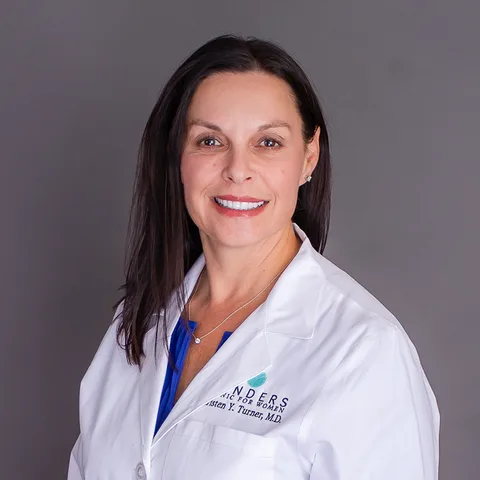
Sanders Clinic for Women is an independent women's health practice in Tupelo that has been open since 1971, with nine physicians and three nurse practitioners working out of two offices in town. Dr. Turner joined in 2004 and does general obstetric and gynecologic care, seeing patients at every stage of life. The practice splits its gynecology work into care before 40 and care after 40, and menopause treatment sits in the after-40 list next to well woman exams and urinary health. The site does not say what menopause treatment here involves or whether hormones are part of it. Visits are in person during weekday clinic hours, and a new patient starts by calling or filling in the appointment request form on the site. Dr. Turner studied microbiology at Mississippi State before medical school and has chaired the obstetrics and gynecology section at North Mississippi Medical Center, where the clinic's doctors deliver babies and operate.
Generation Wellness is Jennifer Soto's own clinic in the Amarillo medical center area, and she is the only clinician the site names. A first visit is a metabolic and hormone lab panel drawn in the office, and the results come back at a separate one hour visit where she goes through symptoms and a plan. For women she offers bioidentical hormone therapy and adds nutrition guidance and supplements, and the clinic also runs a weight loss track on GLP-1 medication. She does in office procedures for pelvic and sexual health as well, including the O-Shot and the EmpowerRF devices for vaginal dryness and bladder leakage. She does not do well woman exams and will not act as a primary care provider, so a patient keeps her own doctor for those. Before opening the clinic she worked with cancer patients, was named Oncology Nurse of the Year by the Panhandle Oncology Nurse Society, and started a local breast cancer support group called Dudes N Divas.
Waverly Women's Health is the OB/GYN clinic of Cooperative Health, a federally qualified health center serving Columbia and the surrounding Midlands. Moore is one of seven providers there, working alongside OB/GYN physicians and other nurse practitioners. The clinic covers women's health at every age, from annual exams and pregnancy care through menopause and post-menopause hormone therapy. Visits are in person on weekdays, and new patients either call the clinic or send an appointment request online for a scheduler to answer within two business days. Because it is a community health center, fees slide with household income for people without insurance and no one is turned away for being unable to pay. Interpreters can be arranged, including Spanish and American Sign Language.
A direct primary care clinic in Rogue River where Heather Friend is the sole provider, seeing whole families across Southern Oregon including Grants Pass and Medford. Care runs on a membership. The first appointment reviews health history and goals, visits last 30 to 60 minutes, and members reach her directly by phone or text, with telehealth used for follow-ups. Hormone care begins with a detailed intake, lab evaluation and ongoing monitoring. Basic hormone support sits inside the membership while new hormone starts need the higher tier. The clinic dispenses medication in house and includes a monthly body composition scan.